





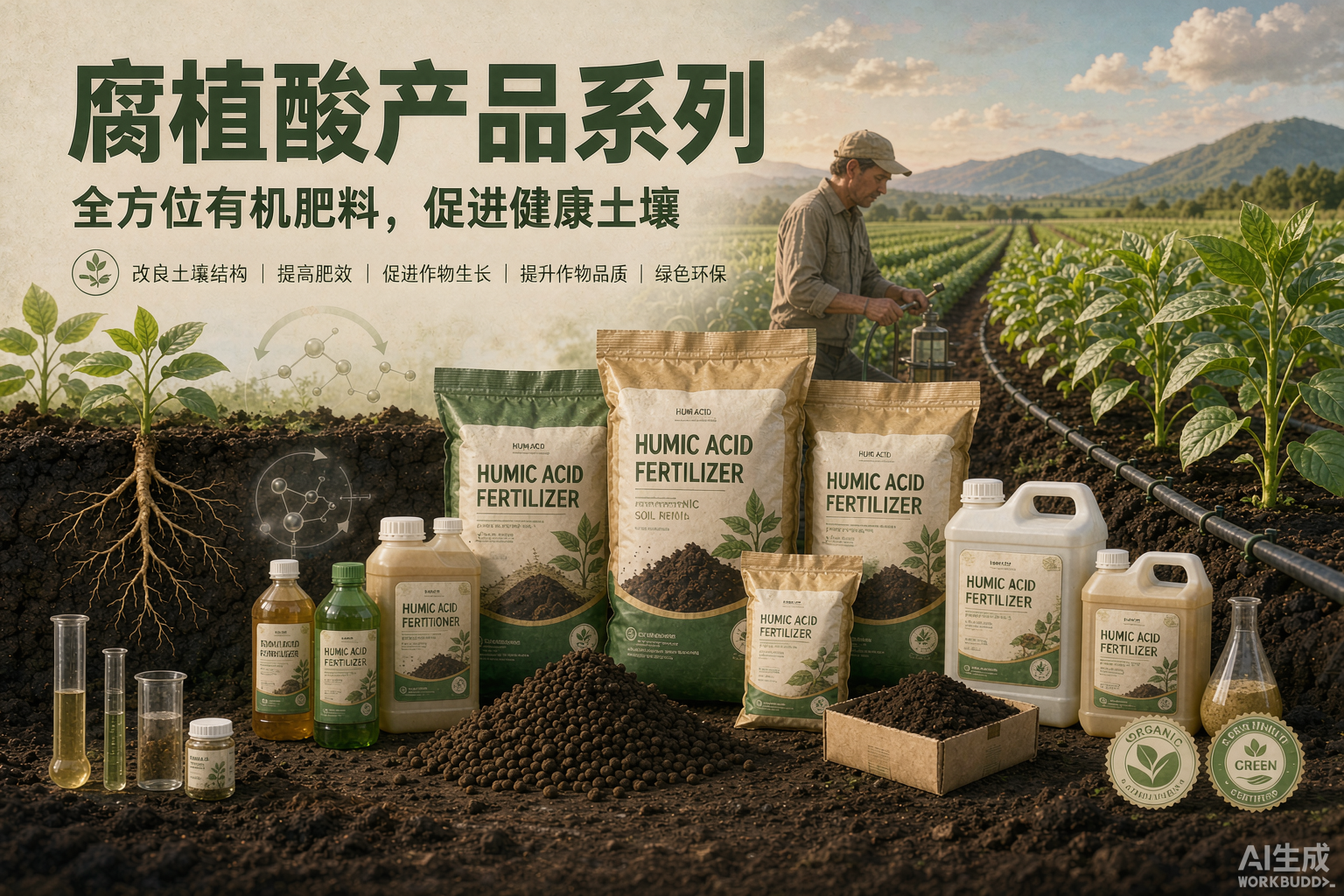
Gardeners and farmers around the world often face the same frustrations: soil becomes compacted over time, more and more chemical fertilizers are used, yet crops grow worse year by year. Droughts or floods easily cause wilting and reduced yields. In fact, the key to solving this problem lies in a natural organic substance—humic acid. Humic acid products, which turn this “soil gold” into a practical organic functional fertilizer, are gaining popularity in sustainable agriculture.
I. What Exactly Are Humic Acid Products?
Let’s get to the core: humic acid is not a synthetic chemical, but a gift from nature. It is a macromolecular organic compound formed over thousands of years by the decomposition of plant and animal residues (such as dead leaves and animal remains) by microorganisms, combined with geological processes. It is widely found in soil, weathered coal, and lignite. The humic acid products available on the market are organic functional fertilizers extracted and processed from these natural raw materials. They mainly contain three core components—fulvic acid, humin, and hymatomelanic acid—along with essential plant elements like carbon, hydrogen, and oxygen, as well as various active functional groups, making them the most active “nutrient regulators” in soil.
Humic acid has a long application history in agriculture globally. Unlike traditional farmyard manure, humic acid products do not require lengthy composting. Crops can absorb them directly, with a utilization rate 3 to 5 times higher than ordinary farmyard manure. They take effect quickly without burning roots, perfectly adapting to modern farming needs.
II. Five Core Benefits: Unlock “All-Round Farming Power”
The advantage of humic acid products is that they do not just “supplement fertilizer” singly. Instead, they form a virtuous cycle among soil, crops, and chemical fertilizers through five key effects—soil improvement, root promotion, fertilizer retention, stress resistance, and microbial regulation—achieving a “1+1>2” result.
1. Soil Improvement: Add a “Sponge” to Soil
Long-term use of chemical fertilizers alone compacts soil particles, making it like “caked cement” where crop roots cannot penetrate deeply or breathe. Humic acid acts like “soil glue,” binding scattered soil particles into water-resistant aggregate structures, creating “breathing holes” and “water storage tanks” in the soil. Its water absorption rate is 10 times that of clay: it locks in moisture during droughts and drains water quickly during floods. Compacted soil can become dark and loose after 1 to 2 growing seasons of using humic acid products, allowing roots to grow deeper naturally.
2. Root Promotion & Nutrient Absorption: Boost Roots with an “Engine”
A strong crop starts with a strong root system. The biostimulants in humic acid mimic plants’ own auxins, stimulating root cell division to produce more fibrous roots and longer root systems—for example, wheat root length can increase by 30% and tomato root biomass by 25% after application. Meanwhile, it activates nutrient transport channels in roots, improving the efficiency of nitrate nitrogen absorption by over 40%. It’s like adding an “accelerator pump” to roots, enabling crops to efficiently absorb nutrients even when soil nutrient levels are low.
3. Fertilizer Retention & Efficiency Enhancement: Wrap Fertilizers in a “Preserver”
Many farmers feel that “chemical fertilizers are wasted,” mainly due to severe nutrient loss: nitrogen fertilizers are easily volatilized, phosphorus fertilizers are fixed by soil, and potassium fertilizers are leached by rainwater. Humic acid forms a “powerful alliance” with chemical fertilizers: it combines with urea to form stable complexes, reducing nitrogen volatilization and extending fertilizer efficiency; it releases “locked” phosphorus and potassium in soil into forms absorbable by crops; it also adsorbs potassium ions to prevent loss, increasing chemical fertilizer utilization by 20% to 30%. Studies by agricultural research institutions worldwide show that humic acid can double phosphorus fertilizer utilization, significantly reducing fertilizer waste.
4. Stress Resistance: Dress Crops in a “Protective Coat”
Humic acid is a “stress-resistance hero” for crops facing extreme conditions like drought, salinization, and low temperatures. During droughts, it reduces the opening degree of crop leaf stomata, decreasing water transpiration—tests show that spraying fulvic acid on wheat reduces water transpiration by 33.7%. In saline-alkali soil, it lowers soil electrical conductivity, alleviating damage to roots from salt and alkali. It also increases crop antioxidant enzyme activity, reducing cell damage from extreme environments, helping crops maintain vitality even during disasters.
5. Microbial Regulation: Nurture “Beneficial Bacteria” in Soil
Soil microorganisms are crucial for nutrient conversion, and humic acid helps “expand the team” of beneficial bacteria. It increases the number of beneficial bacteria and fungi in the rhizosphere, optimizes microbial community structure, and promotes nutrient conversion. At the same time, it inhibits the reproduction of harmful bacteria, reducing the occurrence of soil-borne diseases like root rot. It’s like building an “ecological barrier” for soil, maintaining its health and vitality, and reducing disease risks at the source.
III. Practical Usage & Common Pitfalls
Humic acid products work well, but correct usage is key. Keep these points in mind:
- Scientific Ratio: When mixed with nitrogen fertilizers, the ratio of humic acid to urea is preferably 1:3 to 1:5. For foliar spraying, use 0.05% to 0.1% humic acid + 0.3% to 0.5% urea. For drip irrigation, apply 5 to 10 kg of liquid humic acid fertilizer + 10 to 15 kg of urea per mu (approx. 0.067 hectares).
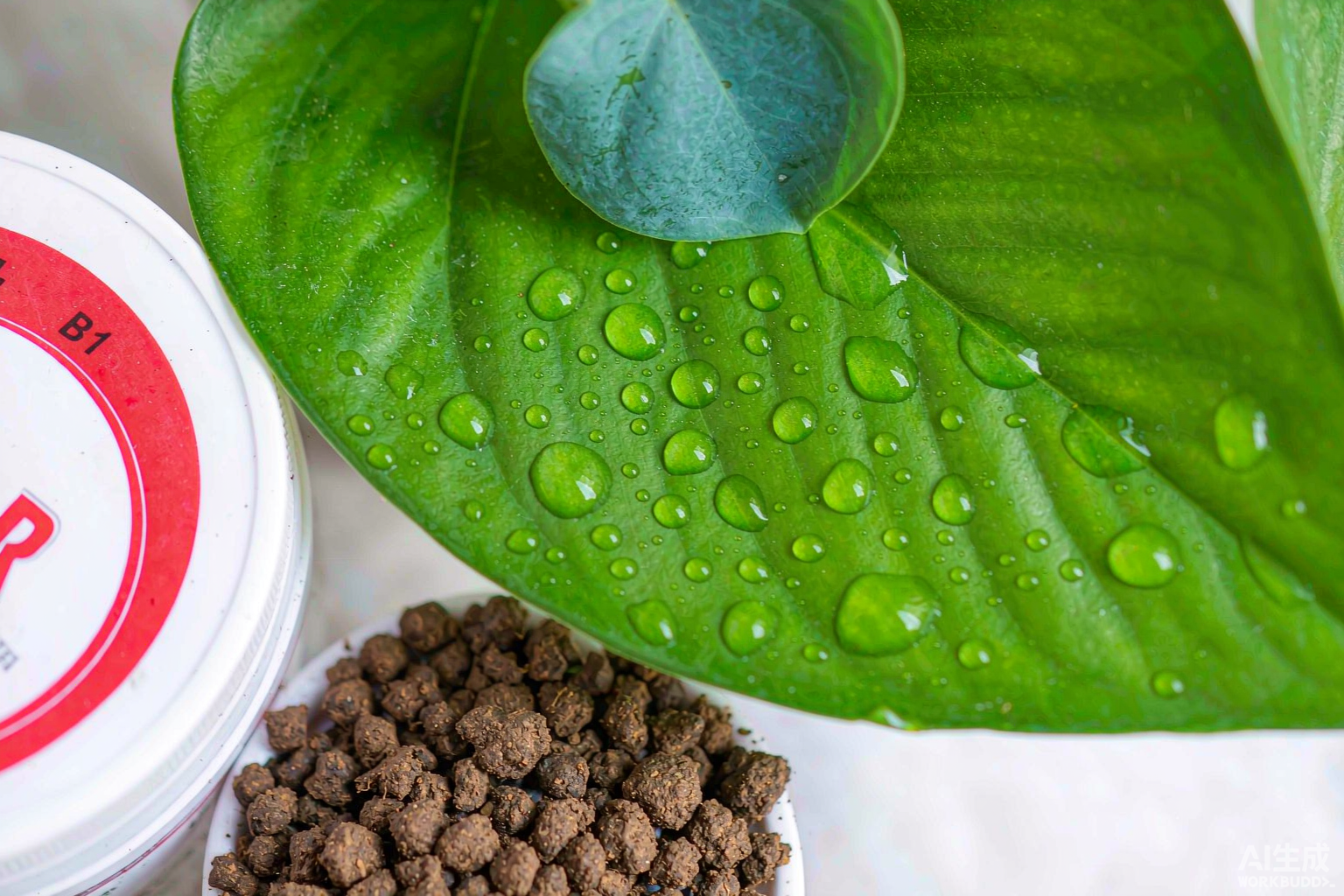
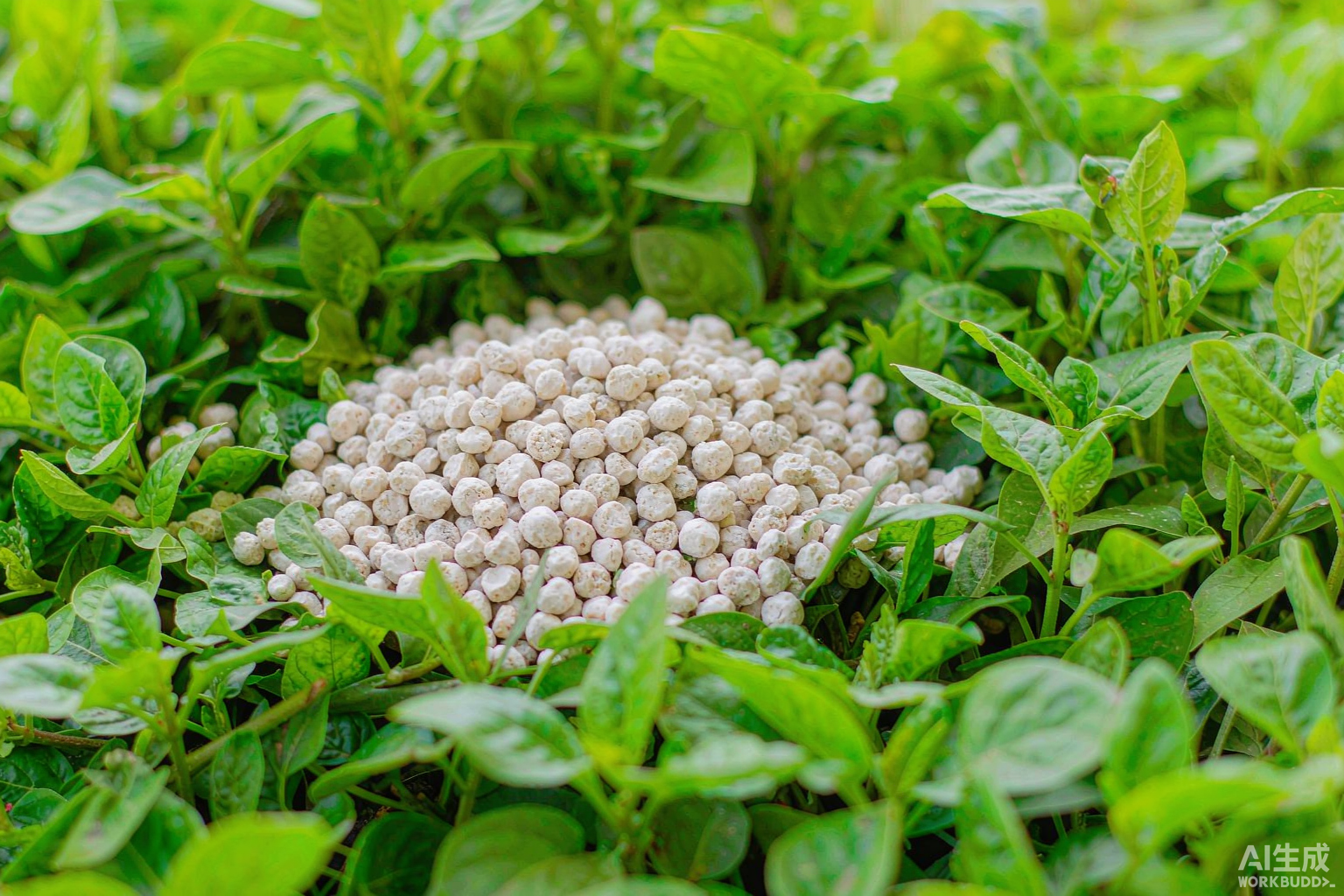
- Choose the Right Product: For compacted soil, select granular humic acid organic fertilizer; for drought resistance and growth promotion, choose liquid fulvic acid fertilizer. For acidic soil, mix with lime to adjust pH. Avoid sodium humate in saline-alkali soil; prioritize potassium humate.
- Do Not Overapply: It is an “efficiency enhancer,” not a “more-is-better” product. For field crops, apply 20 to 50 kg per mu; increase appropriately for fruits and vegetables. Follow the “small amounts, multiple times” principle—overapplication can cause soil hypoxia.
- Avoid Taboos: Do not mix directly with strongly alkaline fertilizers like wood ash; apply them 7 days apart. Dilute liquid humic acid fertilizer separately to prevent flocculation with high-concentration chemical fertilizers.
IV. Conclusion: An Essential Tool for Sustainable Farming
As sustainable and organic farming gains global attention, humic acid products have become key to addressing soil degradation and reducing chemical fertilizer use, thanks to their natural, efficient, and multi-functional advantages. They are more than just a fertilizer—they are like soil’s “nutritionist” and crops’ “protective umbrella,” enriching soil, strengthening roots, improving crop quality, and ultimately increasing yields and incomes. Whether for field crops, vegetables, or fruit trees, whether in compacted or saline-alkali soil, rational use of humic acid products makes farming easier and more efficient.
Interested in JINGFENG’s humic and fulvic acid products? Explore our full range of high-quality biostimulants and organic fertilizers.




Leave a Comment
Your email address will not be published. Required fields are marked *