





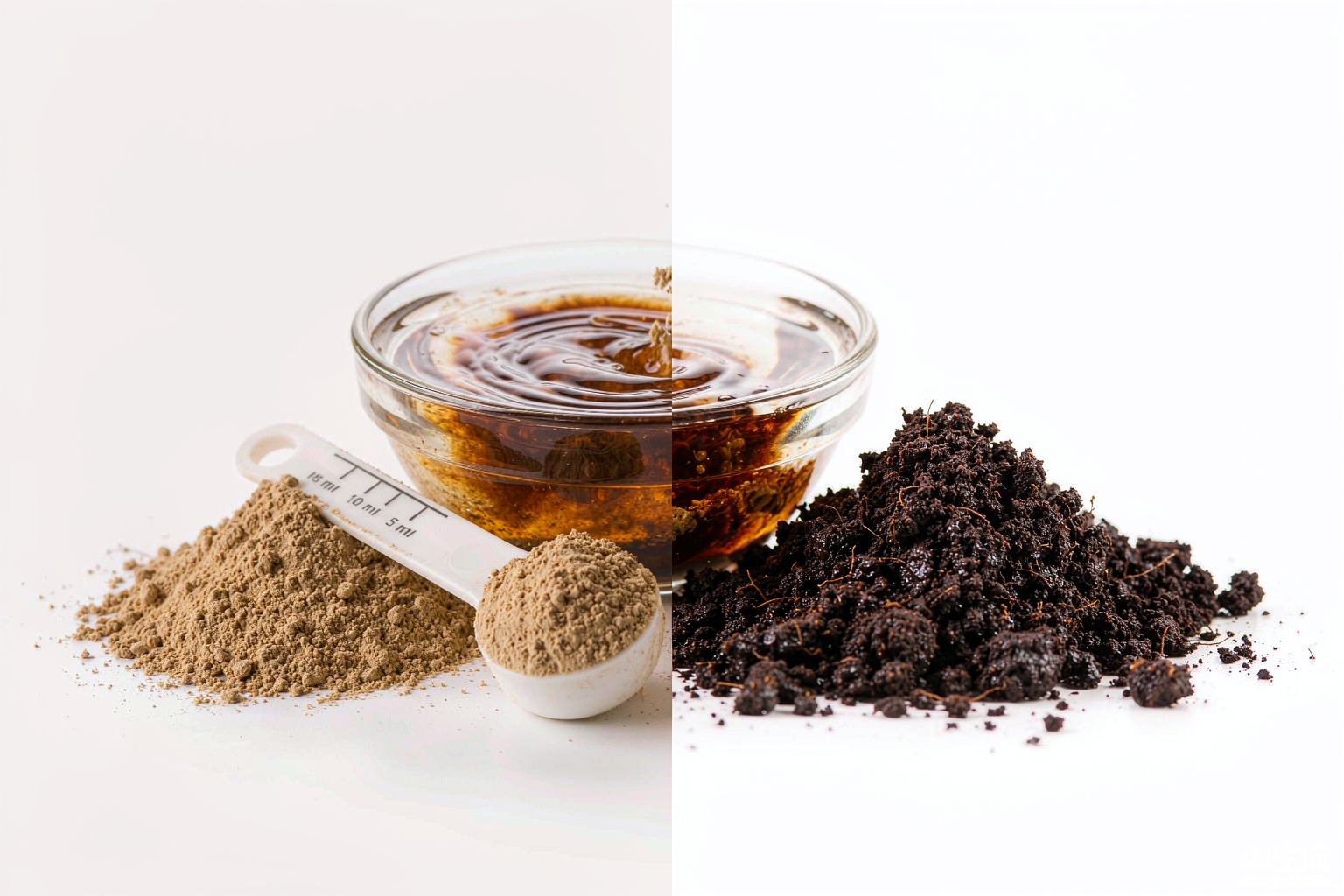
Amid the global trend of “quality and efficiency enhancement” in agricultural production, green amendments led by Water Soluble Humic Acid Powder (WSHA), alongside related water-soluble humic acid derivatives—potassium humate, sodium humate, and mineral-sourced fulvic acid (MSFA)—have emerged as indispensable tools for both farmers and agronomists. Derived from natural humus, these products surmount the application barriers of traditional humic acid via their intrinsic water-solubility, providing multifaceted support for soil remediation and crop performance optimization. This article demystifies the mechanisms and practical applications of these innovative agricultural inputs.
From Humus to “Water-Soluble Gold”: A Transformation in Agricultural Utility
To contextualize WSHA, a foundational understanding of its precursor—humic acid (HA)—is essential. HA is a complex mixture of natural organic macromolecules formed via microbial decomposition and transformation of lignocellulosic plant and animal residues over millennia. It is abundantly present in geogenic deposits such as peat, lignite, and weathered coal. However, native HA primarily exists in insoluble or poorly soluble forms, resulting in low bioavailability to crops and thus limiting its agricultural potential.
WSHA is produced by isolating soluble fractions from natural HA through advanced technologies, including alkaline extraction, ultrafiltration, and chemical activation. In contrast, potassium humate and sodium humate are ionic derivatives formed by neutralizing HA with potassium hydroxide and sodium hydroxide, respectively, achieving high water-solubility through ionic dissociation. As a high-value subset of water-soluble humic substances, MSFA consists of low-molecular-weight (<3000 Da) fractions extracted from mineralized humus, exhibiting superior soil penetration and cellular absorption kinetics. All these processes preserve the core functional groups of HA while conferring "instant solubility and rapid translocation," enabling direct nutrient uptake via crop roots and foliar tissues. This addresses the inherent limitations of native HA—slow efficacy and low utilization efficiency—forming a versatile "water-soluble humic portfolio" for modern agriculture.
Three Core Functionalities Reshaping Agricultural Productivity
The agricultural value of WSHA, potassium humate, sodium humate, and MSFA originates from their unique molecular architecture—enriched with oxygen-containing functional groups (carboxyl, hydroxyl, phenolic hydroxyl, and carbonyl). These groups act as “molecular chelators and surfactants,” facilitating nutrient transport and soil colloidal stability. Their functionalities can be systematically categorized into three domains: soil remediation, growth promotion, and abiotic stress mitigation, with nuanced performance differences attributed to molecular weight and ionic composition.
Function 1: Soil Remediation – Enhancing Edaphic Fertility
Continuous monocropping and excessive synthetic fertilizer application frequently induce soil degradation issues—compaction, acidification, and salinization—which impair soil aeration and hydraulic conductivity. WSHA, potassium humate, sodium humate, and MSFA mitigate these problems through multiple mechanisms: their macromolecular chains interact with clay particles to form stable soil aggregates (250–2000 μm), acting as a “porous matrix” that enhances water-holding capacity (by 15–30% in sandy soils) and nutrient retention while improving gas exchange. Specifically, potassium humate duals as a potassium fertilizer (K₂O content typically 8–12%) during soil amendment; MSFA, with its low molecular weight, diffuses 2–3 times faster in the rhizosphere, delivering rapid soil pH buffering effects.
Additionally, their functional groups regulate soil pH by neutralizing H⁺ in acidic soils (pH < 5.5) and complexing Na⁺ in saline-alkaline soils (EC > 4 dS/m), reducing osmotic stress. Critically, these substances serve as a microbial growth substrate, stimulating the proliferation of beneficial rhizobacteria (e.g., Rhizobium, Bacillus megaterium) by 50–100%, which enhances nutrient cycling and converts unavailable soil nutrients into plant-available forms, restoring degraded soils to a productive state.
Function 2: Growth & Quality Enhancement – Optimizing Nutrient Uptake
Crop productivity relies on the bioavailability of primary macronutrients—nitrogen (N), phosphorus (P), potassium (K)—and secondary/ micronutrients. Synthetic fertilizers typically suffer from low utilization efficiency: P is readily immobilized by soil Ca²⁺, Fe³⁺, and Al³⁺ ions; N is lost via volatilization (NH₃) and leaching (NO₃⁻), resulting in average utilization rates below 35%. The “chelating and complexing capacity” of water-soluble humic products addresses this challenge: they form stable humic-N complexes (half-life extended by 2–3 weeks) to reduce N loss, and chelate P, K, and micronutrients (Ca, Mg, Zn, Fe) into soluble complexes, increasing their rhizosphere availability by 40–60%. MSFA exhibits the strongest chelating efficiency (stability constant log K > 10 for Zn²⁺), making it particularly effective for correcting micronutrient deficiencies in calcareous soils.
Beyond nutrient mobilization, these products exert direct biostimulant effects: they upregulate root meristem activity, increasing root biomass by 20–40% and enhancing fibrous root development for improved nutrient foraging; modulate stomatal conductance to reduce transpiration loss by 10–15% under water-limited conditions while maintaining photosynthetic rate; and promote the synthesis of soluble sugars (Brix value increased by 0.5–1.2°) and antioxidants (vitamin C by 15–25%) during fruit ripening, enhancing market quality. Field trials on wheat and rice demonstrate 10–20% yield increases attributed to improved 1000-grain weight and panicle fertility.
Function 3: Stress Mitigation – Bolstering Crop Resilience
Abiotic stresses—drought, cold (≤10°C for warm-season crops), and salinity—are major constraints to global agriculture. Water-soluble humic products act as “stress alleviators” through physiological regulation: under drought, they accumulate osmolytes (proline, glycine betaine) to maintain cellular turgor, enabling 30–40% higher water use efficiency; during cold stress, they enhance membrane fluidity by increasing unsaturated fatty acid content, reducing electrolyte leakage by 20–30%; in saline conditions, they exclude Na⁺ from root cells via enhanced plasma membrane H⁺-ATPase activity, mitigating ion toxicity.
Furthermore, they enhance biotic stress resistance by activating the plant’s systemic acquired resistance (SAR) pathway, increasing pathogenesis-related (PR) protein expression and polyphenol oxidase activity. This reduces disease incidence (e.g., powdery mildew on grapes by 25–35%) and lessens reliance on synthetic pesticides, aligning with integrated pest management (IPM) practices and sustainable agriculture goals.
Best Practices for Scientific Application
Despite their versatility, water-soluble humic products require scientific application to maximize efficacy. Agronomic guidelines for optimal use include the following:
1. Product Selection Criteria. Differentiate products based on performance metrics: WSHA should have HA content ≥50% (dry basis), solubility ≥95% in neutral water, and low heavy metal content (Pb < 10 mg/kg, Cd < 1 mg/kg); potassium humate requires K₂O ≥ 10% and water-insoluble matter <5%; sodium humate is preferred for saline soils (avoids additional K accumulation); MSFA must meet mineral-source certification (extracted from lignite/weathered coal) with fulvic acid content ≥90% and molecular weight <3000 Da. Verify compliance with regional standards (e.g., EU Regulation 2019/1009, US OMRI) for organic production.
2. Application Rates & Methods. Tailor rates to crop type and growth stage: For field crops (wheat, corn), apply 0.75–1.5 kg/ha WSHA, 1.5–2.25 kg/ha potassium/sodium humate, or 0.3–0.75 kg/ha MSFA; for high-value horticultural crops (tomato, strawberry), rates increase to 1.5–3 kg/ha WSHA, 2.25–3.75 kg/ha potassium/sodium humate, or 0.75–1.5 kg/ha MSFA. Preferred application methods include drip irrigation (uniform distribution) and foliar spraying (0.1–0.2% concentration, applied during early morning/late afternoon to avoid photodegradation). Always conduct a small-scale compatibility test before tank-mixing with other inputs.
3. Compatibility & Formulation. These products are compatible with most NPK fertilizers, systemic pesticides, and microbial inoculants. When mixed with phosphate fertilizers, they prevent P immobilization; when combined with bio-stimulants (e.g., seaweed extracts), they exhibit synergistic effects. Avoid mixing with strong acids (pH < 4) or alkalis (pH > 10), which degrade humic structures. Optimal application pH range: 5.5–7.5.
4. Timing Strategies. Target critical growth stages: seedling stage (promotes root establishment), flowering stage (enhances pollination and fruit set), and fruit development stage (improves quality). For degraded soils, apply 2–3 times per growing season (interval 2–3 weeks) to gradually restore soil health. In stress-prone environments, apply 7–10 days before anticipated stress events (e.g., cold snaps, drought periods) for pre-conditioning.
A Cornerstone Input for Sustainable Agriculture
Under global initiatives for sustainable agriculture (e.g., UN Sustainable Development Goal 2, EU Green Deal), water-soluble humic products (WSHA, potassium humate, sodium humate, MSFA) represent a circular economy solution—valorizing low-grade humus resources into high-value agricultural inputs. Their triple benefits—reducing synthetic fertilizer/pesticide use (by 15–20%), improving crop productivity, and restoring soil health—align with both economic and environmental sustainability. For researchers, their multifunctional mechanisms (chelating, biostimulant, stress mitigation) offer avenues for interdisciplinary studies in soil chemistry, plant physiology, and environmental microbiology.
From rhizosphere processes to whole-crop performance, water-soluble humic products are redefining modern agricultural practices. With advancing extraction technologies (e.g., enzyme-assisted extraction, nanofiltration) and precision application methods (variable rate technology), these natural inputs will play an increasingly pivotal role in addressing global food security challenges while safeguarding agricultural ecosystems.
Interested in JINGFENG’s humic and fulvic acid products? Explore our full range of high-quality biostimulants and organic fertilizers.



Leave a Comment
Your email address will not be published. Required fields are marked *