






In an era marked by escalating climate variability and growing concerns over environmental sustainability, the global agricultural sector is undergoing a profound transformation. Conventional farming practices, heavily reliant on synthetic fertilizers, have long contributed to issues such as soil degradation, water pollution, and greenhouse gas emissions. Against this backdrop, plant amino acid fertilizer has emerged as a revolutionary alternative, offering a synergistic blend of nutritional efficacy and environmental benignity. As a class of water-soluble, bioactive fertilizers, they are redefining crop nutrition by enhancing yield, improving quality, and fortifying plants against abiotic stresses. This article delves into the scientific mechanisms, multifaceted benefits, practical applications, and future prospects of plant amino acid fertilizer, highlighting its pivotal role in advancing sustainable agriculture worldwide.
Composition and Production Fundamentals of Plant Amino Acid Fertilizer
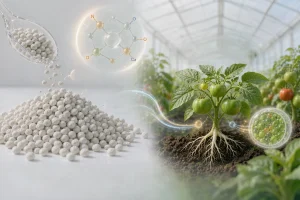
To comprehend the uniqueness of plant amino acid fertilizer, it is essential to first clarify its composition and production fundamentals. Unlike synthetic fertilizers that primarily supply macronutrients (nitrogen, phosphorus, potassium) in inorganic forms, plant amino acid fertilizer is centered on free amino acids—organic compounds containing both amino (-NH₂) and carboxyl (-COOH) functional groups—supplemented with essential medium and trace elements such as calcium, magnesium, iron, and zinc . These amino acids are typically derived from plant-based protein sources, including soybean meal, rapeseed cake, and rice bran, through advanced hydrolysis processes that break down proteins into readily absorbable free amino acids and small peptides . According to agricultural standards, solid formulations of plant amino acid fertilizer must contain no less than 10.0% free amino acids, while liquid variants require a minimum of 100 g/L, with strict limits on water-insoluble substances to ensure complete solubility and bioavailability . This plant-derived origin not only ensures compatibility with natural ecosystems but also endows the fertilizer with unique biological activities that extend beyond basic nutrition.
Core Mechanisms of Action of Plant Amino Acid Fertilizer
The efficacy of plant amino acid fertilizer stems from its multiple mechanisms of action, which operate at the molecular, cellular, and organ levels of plants. A primary advantage lies in its role as a direct metabolic fuel. Plants naturally synthesize amino acids through energy-intensive nitrogen assimilation processes, but exogenous application of pre-formed amino acids bypasses this step, allowing plants to allocate more energy to growth and reproduction . This direct supply accelerates protein synthesis, enzyme activation, and hormone production, leading to enhanced vegetative growth, robust root development, and improved reproductive performance. For instance, glutamic acid and proline have been shown to stimulate root meristem activity, increasing the number of lateral roots by 30%-50% and expanding total root surface area by 2-3 times, thereby boosting water and nutrient uptake efficiency .
Another key mechanism is the fertilizer’s function as a natural chelating agent. Trace elements, though essential for plant growth, are often immobilized in soil due to pH imbalances and chemical reactions, making them unavailable to plants. Amino acids bind to these metal ions, forming stable, water-soluble complexes that can be easily absorbed by roots and foliage . This chelation effect is particularly crucial in alkaline soils, where micronutrient deficiencies are prevalent. For example, in calcareous soils, amino acid-chelated iron prevents precipitation and ensures efficient uptake by crops, mitigating chlorosis caused by iron deficiency . Additionally, this chelation capability improves soil nutrient retention, reducing leaching losses and enhancing overall fertilizer use efficiency.
Enhancement of Crop Stress Tolerance Under Climate Change
In the context of climate change, the role of plant amino acid fertilizer in enhancing crop stress tolerance has become increasingly prominent. Global climate change has led to more frequent occurrences of drought, high temperatures, cold snaps, and extreme weather events, which cause annual global grain losses of 10%-25% . Plant amino acid fertilizer mitigates these stresses through multiple protective pathways. Under drought conditions, amino acids such as proline and aspartic acid promote the accumulation of osmotic regulators (e.g., betaine, soluble sugars) in plant cells, increasing cytoplasmic osmolarity by 0.3-0.5 MPa and maintaining cell turgor . They also regulate stomatal aperture through ABA signaling pathways, reducing transpiration by 25% without compromising photosynthetic efficiency, thereby improving water use efficiency in drought-stressed crops . In high-temperature environments, glycine and serine induce the expression of heat shock proteins (HSP70, HSP90), raising the heat tolerance threshold of crops from 38℃ to 42℃ and protecting the photosystem II from damage . For cold stress, proline inhibits ice nucleation, lowering the freezing point of cell fluids from -2℃ to -5℃, and cysteine maintains membrane protein stability through thiol-disulfide exchange reactions, reducing cell membrane permeability and improving overwintering survival rates .
Practical Applications Across Diverse Crops
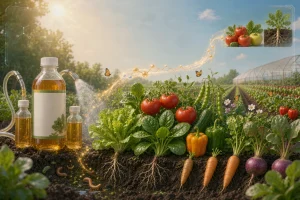
The practical applications of plant amino acid fertilizer span a wide range of crops, including cereals, fruits, vegetables, and cash crops, delivering consistent benefits in yield improvement and quality enhancement. Specific application cases across different crop categories are as follows:
- Cereal Crops (Wheat): Foliar application of 5 cm³/L amino acid fertilizer combined with reduced nitrogen rates (250 kg N ha⁻¹) achieves yield and quality levels comparable to recommended high-nitrogen treatments, while reducing nitrogen usage by 16.7%. This synergistic effect cuts production costs and minimizes environmental pollution from excessive nitrogen application.
- Fruit Crops (Citrus, Mango): Applying amino acid fertilizer during the fruiting and ripening stages, in combination with potassium fertilizer, increases fruit sugar content, improves coloration, and enhances storage stability. For Jincheng orange (a citrus variety), amino acid compound fertilizer increases fruit yield by 9.9%, individual fruit weight by 16.1%, total sugar content by 15.6%, and vitamin C content by 15.0% compared with conventional fruit tree compound fertilizer.
- Vegetables (Tomatoes, Peppers, High-Altitude Cabbage): Drip irrigation of amino acid fertilizer during the seedling stage improves disease resistance and reduces root rot in tomatoes and peppers. In high-altitude cabbage cultivation (Lichuan, Hubei Province, China), supplementing formula fertilizer with amino acid original powder (≥10% amino acids, ≥35% organic matter) increases yield per mu by 7.18% to 19.62% (additional output of 230.8 to 630.8 kg per mu) and net income per mu by 271.44 to 799.44 yuan, attributed to enhanced cabbage head compactness and improved soil fertility.
- Cash Crops (Mulberry): Using amino acid fertilizer as top dressing (with the same total effective nutrients as conventional fertilizers) increases mulberry leaf yield by 17% to 50% and crude protein content in leaves by 3% to 9%, which significantly improves the quality of silkworm feed and promotes the development of the sericulture industry.
- Ornamental Plants (African Marigold, Green-Tinged Spider Lily): For African marigold under drought stress, foliar application of 100 mg/L ornithine, arginine, or proline (key components of amino acid fertilizer) alleviates water deficit damage—ornithine boosts above-ground biomass and flower longevity, proline enhances root growth and antioxidant enzyme activity, and arginine increases plant height and pigment content. For green-tinged spider lily, foliar spray of 2.0 ml/L amino acid fertilizer combined with 0.5 g/L microelements and 0.25 ml/L calcium improves plant height, leaf area, spike length, flower diameter, and bulb weight, while increasing nutrient contents in leaves and bulbs.
- Post-Disaster Recovery: After hail or wind damage, glutamine accelerates callus formation by 50%, and serine promotes chlorophyll synthesis, allowing damaged leaves to recover 85% of their photosynthetic capacity within 7 days.
Contributions to Soil Health and Agricultural Sustainability
Beyond crop benefits, plant amino acid fertilizer contributes significantly to soil health and long-term agricultural sustainability. When applied to soil, amino acids serve as a nutrient source for beneficial microorganisms, stimulating microbial activity and enhancing microbial community diversity . This enhanced microbial activity accelerates organic matter decomposition and nutrient cycling, improving soil fertility. The organic components of the fertilizer also enhance soil structure, increasing porosity and reducing compaction, which improves water infiltration and retention . Furthermore, amino acids can neutralize heavy metals in soil and break down pesticide residues through redox reactions, reducing environmental pollution and promoting soil remediation . These soil-improving effects address the long-standing issues of soil degradation caused by conventional farming practices, laying the foundation for sustainable soil management.
Global Market Dynamics and Growth Prospects
The global market for plant amino acid fertilizer is witnessing robust growth, driven by increasing adoption of sustainable agriculture practices and rising demand for high-quality, chemical-free produce. The market size grew from USD 622.46 million in 2024 to USD 679.22 million in 2025 and is projected to reach USD 1.04 billion by 2030, with a compound annual growth rate (CAGR) of 9.04% . Key market trends include the development of functional formulations that combine amino acids with biocontrol agents (e.g., Trichoderma, Bacillus) for enhanced disease resistance, and the integration of digital agriculture technologies for precise application . Regional growth is particularly strong in the Asia-Pacific region, driven by large-scale agricultural operations in China and India, and in North America and Europe, where stringent environmental regulations are pushing growers toward eco-friendly inputs . Leading manufacturers are focusing on advanced technologies such as encapsulated formulations and biodegradable carriers to improve fertilizer stability and efficacy .
Challenges and Future Research Directions
Despite its numerous advantages, the widespread adoption of plant amino acid fertilizer still faces challenges. These include higher production costs compared to synthetic fertilizers, variable product quality due to inconsistent raw material sources and production processes, and limited awareness among small-scale farmers . To address these challenges, future research should focus on optimizing production technologies to reduce costs, developing standardized quality control systems, and conducting targeted extension services to educate farmers on proper application methods. Additionally, exploring the synergistic effects of amino acids with other biostimulants and precision agriculture tools will further enhance their efficacy and applicability.
In conclusion, plant amino acid fertilizer represents a paradigm shift in agricultural nutrition, offering a sustainable solution to the dual challenges of increasing food production and protecting the environment. Its unique mechanisms of action—direct nutrient supply, chelation, stress tolerance enhancement, and soil improvement—make it an indispensable tool for modern agriculture. As global efforts to combat climate change and promote sustainable development intensify, plant amino acid fertilizer will play an increasingly critical role in ensuring food security, improving crop quality, and preserving soil health. With ongoing technological innovations and market expansion, it is poised to become a cornerstone of sustainable agricultural systems worldwide, bridging the gap between productivity and environmental stewardship.
Interested in JINGFENG’s amino acid products? Explore our full range of high-quality biostimulants and organic fertilizers.

Leave a Comment
Your email address will not be published. Required fields are marked *