





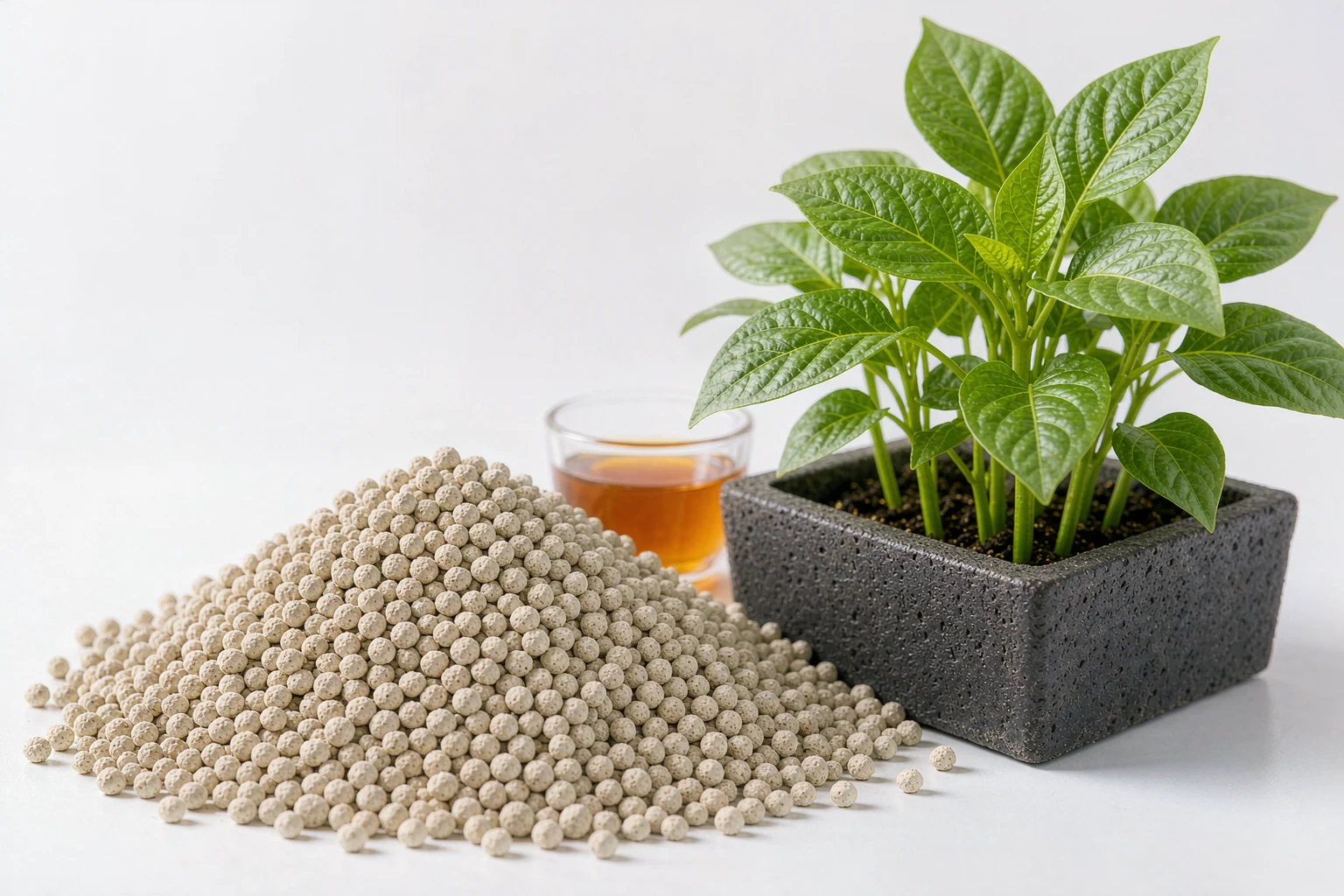
When we talk about crop fertilizers, chemical fertilizers and organic fertilizers often come to mind. However, in the field of modern agriculture, a “new star” – plant amino acid fertilizer – is gradually gaining attention with its unique advantages. It is not only environmentally friendly but also highly efficient, becoming an important helper for improving crop quality and yield. What exactly is plant amino acid fertilizer? How does it work on crops? Let’s uncover its mystery together.
What is Plant Amino Acid Fertilizer?
Amino acids are the basic building blocks of proteins and the “core nutrients” for all life activities. Plant amino acid fertilizer is a type of fertilizer that takes amino acids as the main active ingredient, supplemented by trace elements (such as iron, zinc, boron, etc.) needed by crops. These amino acids are not synthetic chemical substances in the traditional sense, but mostly come from natural raw materials through biological fermentation, enzymatic hydrolysis and other technologies, which are safe and compatible with the growth laws of crops.
Different from traditional chemical fertilizers that only provide macro-nutrients such as nitrogen, phosphorus and potassium, plant amino acid fertilizer focuses on “regulating” and “assisting” – while supplementing nutrition, it can also improve the physiological functions of crops, making them more “energetic” to absorb nutrients and resist harsh environments.
Where Do the Amino Acids in Fertilizers Come From?
The amino acid raw materials of plant amino acid fertilizer mainly come from two major categories, both of which have the characteristics of environmental protection and sustainability:
- Plant-derived raw materials: Such as soybean meal, cottonseed meal, rapeseed meal, wheat bran and other agricultural by-products. These materials are rich in protein. After enzymatic hydrolysis or microbial decomposition, the protein is broken down into small molecular amino acids that can be directly absorbed by crops. This not only realizes the recycling of agricultural waste but also avoids the pollution caused by the random stacking of by-products.
- Animal-derived raw materials: Including fish meal, bone meal, feather meal and other animal by-products. Through professional biological treatment technology, the protein in these raw materials is converted into amino acids. For example, fish protein amino acid fertilizer, which is processed from marine fish, not only contains a variety of amino acids but also carries marine biological active substances, which has a more significant effect on promoting crop growth.
The “Magic Effects” of Plant Amino Acid Fertilizer on Crops
The reason why plant amino acid fertilizer is favored by farmers is closely related to its multiple functions. It is like a “multi-functional nutrition partner” of crops, which can play a role in all stages of crop growth:
1. Promote nutrient absorption and improve fertilizer efficiency
Crops have limited ability to directly absorb macromolecular nutrients. Amino acids can act as “carriers” – they can chelate with trace elements (such as iron, zinc, copper) that are easily fixed in the soil, forming a chelate that is easily absorbed by crop roots. This not only solves the problem of “insufficient nutrient absorption” caused by the fixation of trace elements in the soil but also improves the utilization rate of traditional chemical fertilizers, reducing the waste of nutrients and environmental pollution.
2. Enhance stress resistance and help crops “survive difficulties”
Crops will encounter various “tests” in the growth process, such as drought, high temperature, low temperature, pests and diseases, etc. Amino acids can regulate the physiological metabolism of crops: for example, proline and glycine betaine in amino acids can help crops retain water and maintain cell stability under drought and high temperature conditions; under low temperature conditions, they can promote the synthesis of crop cold-resistant proteins and improve cold resistance. At the same time, amino acids can also stimulate the synthesis of disease-resistant enzymes in crops, enhance the “immunity” of crops, and reduce the damage of pests and diseases.
3. Improve crop quality and increase economic value
Compared with chemical fertilizers that only pursue yield, plant amino acid fertilizer pays more attention to the improvement of crop quality. It can promote the synthesis of beneficial substances in crops, such as increasing the sugar content of fruits, the vitamin C content of vegetables, and improving the brightness and tenderness of fruits. For example, applying amino acid fertilizer to tomatoes can make the fruit larger, the color more uniform, and the taste sweeter; applying it to tea can improve the aroma and tenderness of tea leaves. These quality improvements can significantly increase the market competitiveness of agricultural products.
4. Improve soil environment and lay a good foundation for growth
Amino acids are not only beneficial to crops but also “food” for soil microorganisms. After applying amino acid fertilizer to the soil, it can promote the reproduction of beneficial microorganisms (such as rhizobia, actinomycetes) in the soil, improve the activity of soil enzymes, and thus improve the soil structure – making the clay soil looser and the sandy soil more water-retaining and fertilizer-retaining. In the long run, it can reduce soil compaction and salinization caused by the long-term use of chemical fertilizers, and realize the sustainable utilization of soil.
How to Use Plant Amino Acid Fertilizer Correctly?
Although plant amino acid fertilizer has many advantages, scientific use is the key to exerting its effect. Here are some common usage and precautions:
- Choose the right type: Different crops and growth stages have different requirements for amino acids. For example, leafy vegetables (such as cabbage, spinach) need more amino acids to promote leaf growth, and can choose amino acid water-soluble fertilizer with high nitrogen content; fruit trees (such as apples, grapes) need more amino acids to promote fruit expansion and coloring in the fruiting period, and can choose products with added trace elements such as boron and calcium.
- Master the usage method: The common methods include foliar spraying, root irrigation and base application. Foliar spraying is the most efficient way, which can make amino acids be absorbed by crop leaves quickly, and is suitable for the seedling stage and the critical growth period; root irrigation and base application are more suitable for improving soil environment and providing long-term nutrition for crops.
- Control the concentration and frequency: Excessive concentration of amino acid fertilizer may cause “fertilizer damage” to crops (such as leaf burning). Generally, the concentration of foliar spraying is 0.1%-0.3%, and it is sprayed once every 7-10 days, 2-3 times in a growth period; the amount of root irrigation should be determined according to the crop type and soil fertility, and it is not suitable to apply too much at one time.
- Collaborate with other fertilizers: Amino acid fertilizer is a “supplementary fertilizer” rather than a “substitute fertilizer”. It needs to be used in conjunction with traditional chemical fertilizers and organic fertilizers to ensure that crops obtain comprehensive nutrients such as macro-nutrients and trace elements.
The Development Prospect of Plant Amino Acid Fertilizer
With the continuous promotion of the concept of “green agriculture” and “ecological agriculture”, the demand for environmentally friendly and efficient fertilizers is increasing. Plant amino acid fertilizer, as a fertilizer that conforms to the development trend of modern agriculture, has broad development prospects. On the one hand, with the progress of biological technology, the production cost of amino acid raw materials will be further reduced, and the product types will be more diversified; on the other hand, as consumers pay more attention to the quality and safety of agricultural products, the application of amino acid fertilizer will become more and more extensive in the production of pollution-free, green and organic agricultural products.
In short, plant amino acid fertilizer is not a “magic medicine” for crops, but it is a “practical and reliable” nutrition regulator. It connects the recycling of agricultural and animal husbandry by-products with the high-quality growth of crops, and plays an important role in promoting agricultural green development. With the deepening of people’s understanding of it, this “nutritional partner” will definitely contribute more to the sustainable development of agriculture.
Interested in JINGFENG’s amino acid products? Explore our full range of high-quality biostimulants and organic fertilizers.


Leave a Comment
Your email address will not be published. Required fields are marked *