





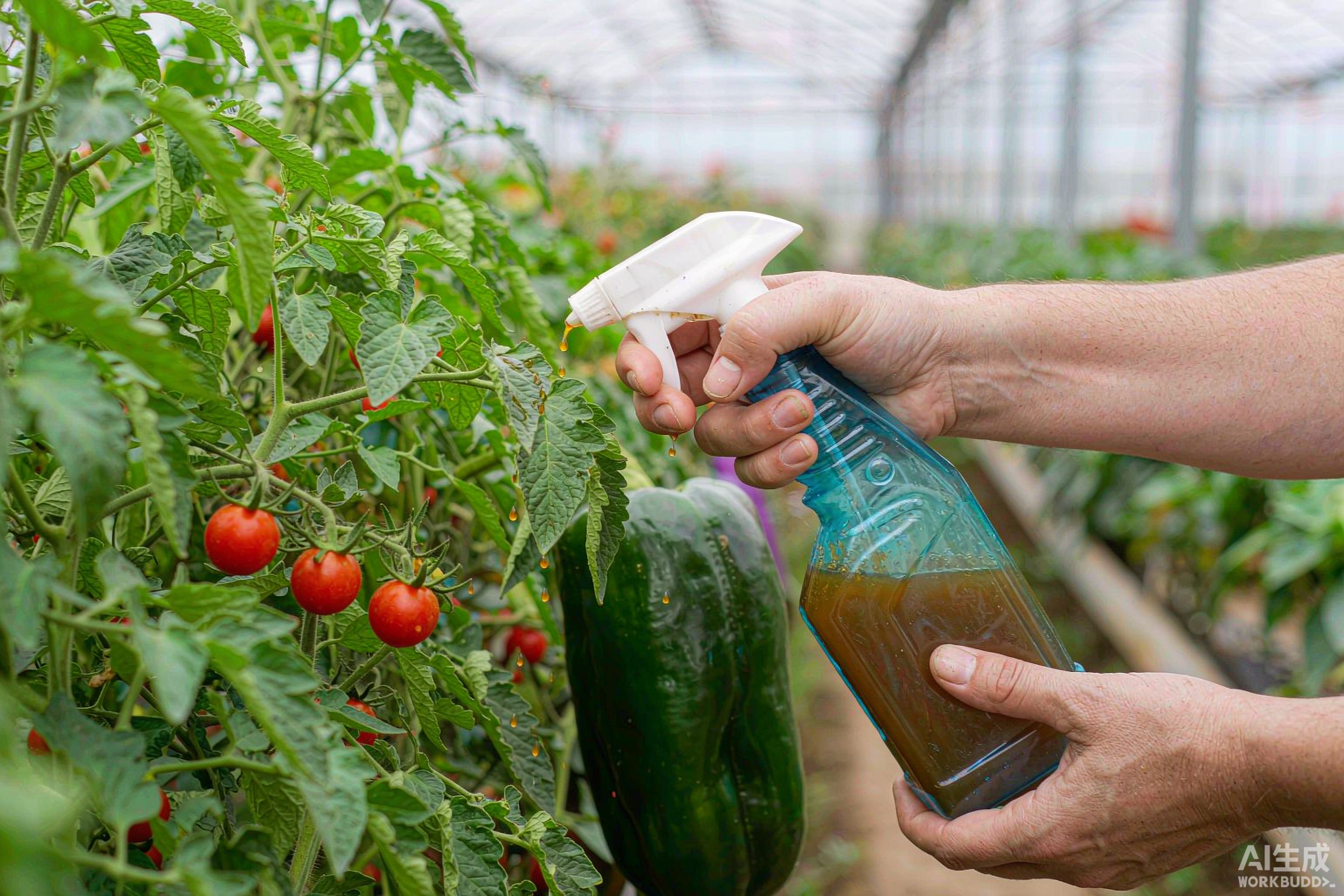
Liquid kelp extract (also called liquid seaweed fertilizer or concentrated seaweed extract) is a natural, organic biostimulant and fertilizer derived from brown seaweed, most commonly Ascophyllum nodosum (a type of rockweed or knotted wrack harvested from cold North Atlantic waters) or other kelp species like bull kelp.
High-quality versions are cold-processed (no heat or harsh chemicals) to preserve beneficial compounds, resulting in a dark liquid concentrate that’s diluted with water before use.
Key Components
It contains:
- Over 60–70 trace minerals and micronutrients (iron, zinc, magnesium, etc.)
- Natural plant growth hormones (auxins, cytokinins, gibberellins)
- Amino acids, vitamins, and polysaccharides
- Low NPK (often 0-0-1 or similar) — it’s not a primary nutrient source but a growth enhancer.
Main Benefits for Plants
Gardeners and farmers love it because it acts like a “plant multivitamin”:
- Stronger roots — Boosts root development and reduces transplant shock.
- Stress resistance — Helps plants tolerate drought, heat, frost, salt, pests, and disease.
- Better growth & yields — Improves seed germination, flowering, fruit size/quality, and shelf life.
- Soil health — Feeds beneficial microbes and improves nutrient uptake.
- Overall vigor — Greener foliage, larger blooms, and higher resilience.
It’s effective on vegetables, fruits, lawns, flowers, trees, shrubs, and even hydroponics.
How to Use It
- Dilution: Typically 1–2 tbsp per gallon of water (check label — concentrates vary).
- Application:
– Foliar spray (most effective — absorbs quickly through leaves; add a surfactant for better sticking).
– Soil drench or root soak.
– Seed soak or compost tea additive.
- Frequency: Every 1–4 weeks during the growing season; safe year-round in mild climates.
- Timing: Early morning or evening to avoid leaf burn.
Popular brands include GS Plant Foods, Maxicrop, Grow More, Bloom City, and Peaceful Valley — many are OMRI-listed for organic use.
It’s safe for pollinators, pets, and the environment when used as directed. Less common uses include human supplements (rich in iodine/minerals), skincare (hydrating/antioxidant), or fishing bait attractants, but the vast majority of “liquid kelp extract” refers to the gardening product.
Liquid Kelp Extract in Agriculture
Liquid kelp (seaweed) extract is one of the most widely used biostimulants in commercial agriculture worldwide. It is approved in organic systems (OMRI-listed brands) and conventional farming alike. Major crops that benefit include fruits, vegetables, grapes, olives, nuts, cereals, and turf/grass seed production.
Proven Agricultural Benefits (backed by university and field trials)
| Benefit | Key Effects | Example Crops |
| Yield increase | 5–25% higher marketable yield (depending on crop and stress level) | Tomatoes, strawberries, grapes, potatoes, corn |
| Improved fruit quality | Larger size, better color, higher sugar (BRIX), longer shelf life | Apples, citrus, berries, wine grapes |
| Drought & heat tolerance | Reduces wilting, maintains photosynthesis under water stress | Wheat, maize, soybeans, almonds |
| Salinity tolerance | Mitigates salt stress in irrigated fields (common in California, Australia, Middle East) | Lettuce, peppers, tomatoes |
| Frost protection | 2–5 °C better cold tolerance when applied pre-frost | Strawberries, vines, stone fruit |
| Disease suppression | Induced systemic resistance (ISR) against powdery mildew, botrytis, etc. | Cucurbits, grapes, apples |
| Nutrient-use efficiency | Better uptake of N, P, K, and micronutrients → potential fertilizer reduction 10–30% | Most field and horticultural crops |
| Root development & nodulation | Stronger roots, more nodules in legumes | Beans, alfalfa, peanuts |
Commercial-Scale Application Methods
- Foliar sprays (most common and effective): 1–4 L/ha (0.1–0.4 L/acre), 2–6 applications per season
- Fertigation/drip irrigation: 2–10 L/ha per cycle
- Seed treatment: 0.5–2% solution soak or coating
- Transplant/root dip: 0.5–1% solution
Typical timing: at planting/transplanting, pre-flowering, fruit set, and during stress periods (drought, heat waves, etc.).
Popular Products Used by Growers (2025)
| Brand | Source Species | Concentration | Notes |
| Acadian Plant Health | Ascophyllum nodosum | 100% soluble | Gold standard; many university trials |
| Maxicrop | Ascophyllum nodosum | Various | Widely available, long history |
| Kelpak | Ecklonia maxima (South Africa) | 11:1 concentrate | High auxin content, excellent for roots |
| Seasol | Durvillaea potatorum (Australia) | Ready-to-use & concentrate | Very popular in Australia/NZ |
| Goëmar / Timac Agro | Ascophyllum + Laminaria | Various | European leader |
| Chase Seaweed Products | Laminaria digitata | High cytokinin | Used in China and Southeast Asia |
Cost-Benefit (2025 pricing approximate)
- Average cost: US $15–35 per liter (concentrate)
- Typical use rate: 5–15 L/ha per season
- ROI: Often 5:1 to 20:1 because of higher marketable yield and reduced fertilizer/pesticide needs
Regulatory Status
- Allowed in organic farming (EU, USDA-NOP, Canada, Japan, etc.)
- Classified as a biostimulant (not a fertilizer) in most countries → minimal registration requirements
Detailed Protocols for Liquid Kelp/Seaweed Extract on Tomatoes (Agricultural Use)
Liquid kelp (seaweed) extract is one of the most researched biostimulants for tomatoes (Solanum lycopersicum), both in greenhouse and open-field production. It consistently improves:
- Root development and transplant success
- Early flowering and fruit set
- Total marketable yield (typically +8–25%)
- Fruit size, uniformity, BRIX (sugar content), and shelf life
- Tolerance to stresses (drought, heat, salinity, diseases like botrytis or powdery mildew)
- Nutrient efficiency (can reduce synthetic fertilizer needs by 10–30%)
Below are consolidated, evidence-based protocols from commercial manufacturers (Kelpak, Acadian, Maxicrop, GS Plant Foods) and peer-reviewed trials (2020–2025).
Recommended Products & Typical Rates
| Product Brand | Seaweed Source | Typical Concentration | Common Foliar Rate (per ha) | Notes |
| Kelpak | Ecklonia maxima | 11:1 concentrate | 2–4 L/ha | High auxin; excellent for roots |
| Acadian (Stella Maris/Toggle) | Ascophyllum nodosum | Soluble powder/liquid | 1–3 L/ha | Most researched; strong on yield & stress |
| Maxicrop | Ascophyllum nodosum | Various | 2–5 L/ha | Classic; good for organic |
| GS Plant Foods / Grow More | Ascophyllum nodosum | Concentrate | 1–2 L/ha (or follow label) | Affordable, OMRI-listed |
General dilution rule: Never exceed 1:300 (product:water) for foliar to avoid phytotoxicity; 1:500–1:000 for drip/fertigation.
Full-Season Protocol for Tomatoes (Greenhouse & Field)
| Growth Stage | Timing (after transplant unless noted) | Application Method & Rate | Frequency / Notes |
| Seed soak (optional) | Before sowing | 0.5–1% solution (5–10 ml/L water) | Soak 8–24 hours → +20–50% faster germination (trials with Sargassum & Ascophyllum) |
| Seedling tray dip / drench | 1–3 days before transplant | 0.5–1% solution (Kelpak: 1%; Maxicrop: 1:100) | Dip trays or drench → reduces transplant shock by 50–70%, stronger roots |
| Transplant root dip | At transplant | 0.5–1% solution | Dip bare roots 5–30 min or spray trays → best single application for establishment |
| Early vegetative | 7–14 days after transplant | Foliar: 2–3 L/ha (or 1–2 tbsp/gal for small areas) | Promotes vigorous rooting & leaf area |
| Pre-flowering | First flower buds visible | Foliar: 2–4 L/ha | Increases flower number & reduces blossom drop |
| Flowering / Fruit set | Full bloom + 10–14 days later | Foliar: 2–4 L/ha (add surfactant for sticking) | Critical stage → +10–25% more fruits, larger size |
| Fruit development | Every 10–14 days during fruit swell | Foliar or fertigation: 3–5 L/ha total season | Improves BRIX, color, uniformity; repeat 3–6 times total |
| Stress periods | Drought, heat wave, or disease pressure | Foliar: 2–3 L/ha | Tank-mix safe with most fungicides/nutrients; apply early morning or evening |
Total seasonal use: 8–20 L/ha (greenhouse often lower; field higher under stress).
Application Tips for Best Results
- Foliar spray (preferred method): Use fine nozzles for full coverage (run-off). Add non-ionic surfactant (0.1%) if label allows — increases absorption 2–3×.
- Fertigation/drip: Safe at 1:500–1:000 dilution; apply during cooler parts of irrigation cycle.
- Timing: Early morning or late afternoon (avoid midday sun to prevent leaf burn).
- Tank mixing: Compatible with most fertilizers, fungicides, and insecticides. Add kelp last and keep pH <7.
- Organic certification: Most brands (Acadian Organic, Kelpak, Maxicrop, GS Plant Foods) are OMRI/USDA-NOP/EU organic approved.
Expected Results from Recent Trials (2020–2025)
| Parameter | Average Improvement | Reference Examples |
| Marketable yield | +12–28% | Kelpak (Europe/SA), Acadian greenhouse trials |
| Fruit weight/size | +10–20% | Ascophyllum extracts on processing tomatoes |
| Early yield (first 2 picks) | +30–110% | Micro-Tom & field trials |
| BRIX / sugars | +0.5–2° | Multiple Durvillaea + Ascophyllum studies |
| Stress tolerance | Better survival under salinity/drought | Padina, Sargassum, and Ascophyllum extracts |
| Disease reduction | Lower botrytis, powdery mildew | Integrated programs with ANE |
Liquid Kelp/Seaweed Extract Protocols for Peppers (Bell, Chili, Hot Peppers)
Peppers (Capsicum annuum) respond extremely well to liquid kelp biostimulants — often even better than tomatoes. Benefits documented in commercial fields and university trials (2020–2025) include:
- 10–30% higher marketable yield
- Larger fruit size and thicker walls (bell peppers)
- Higher capsaicin content and better color (chili/hot peppers)
- Excellent heat, drought, and blossom-end rot tolerance
- Reduced blossom drop during high temperatures
- Stronger resistance to aphids, spider mites, and fungal diseases (powdery mildew, phytophthora)
Recommended Products & Rates (same as tomatoes)
| Product | Typical Foliar Rate per ha | Notes |
| Kelpak | 2–4 L/ha | Highest auxin — best root & early growth |
| Acadian | 1–3 L/ha | Most data on peppers |
| Maxicrop | 2–5 L/ha | Widely used in Mexico & California |
| Goëmar/BM86 | 2–3 L/ha | Popular in Mediterranean greenhouses |
Full-Season Protocol for Peppers (Field & Greenhouse)
| Growth Stage | Timing (after transplant) | Method & Rate (per ha) |
| Seed soak (optional) | Before sowing | 0.5–1% solution (5–10 ml/L) |
| Seedling drench / tray dip | 3–7 days before transplant | 0.5–1% solution |
| Transplant root dip | Day of transplant | 1% solution (dip roots 10–30 min) |
| Establishment | 7–10 days after transplant | Foliar 2–3 L/ha |
| Pre-flowering | First buds visible | Foliar 2–4 L/ha + surfactant |
| Peak flowering | Every 10–14 days during bloom | Foliar 2–4 L/ha |
| Fruit set & sizing | Start of fruit set → every 10–14 days | Foliar or drip 3–5 L/ha total season |
| Color break / ripening | 2–3 weeks before harvest | Foliar 2 L/ha |
| Stress events | Heat waves (>35°C), drought | Foliar 2–3 L/ha immediately |
Total seasonal use: 10–25 L/ha (field peppers under heat/salt stress use the higher end; protected cultivation lower).
Application Tips Specific to Peppers
- Peppers are very sensitive to blossom drop above 32–35°C daytime. A preventive foliar spray of kelp 2–3 days before a predicted heat wave can cut drop by 40–70%.
- Blossom-end rot (BER): Kelp improves calcium translocation. Many California and Israeli growers tank-mix kelp + calcium products and virtually eliminate BER.
- Tank mixing: Safe with most insecticides/fungicides used on peppers (e.g., Actara, Ridomil, copper). Add kelp last.
- Drip/fertigation: Very effective in desert regions (Arizona, Almería, Sinaloa) at 1:800–1:000 dilution.
Documented Results on Peppers (recent trials)
| Parameter | Improvement | Location / Source |
| Marketable yield | +15–32% | Mexico (Sinaloa), Spain (Almería), Israel |
| Fruit weight (bell) | +18–25% | Acadian & Kelpak trials |
| Blossom drop reduction | 40–70% during heat | Mediterranean greenhouse studies |
| Capsaicin content (chili) | +10–20% | Indian & Thai trials |
| Blossom-end rot | Reduced 60–90% | California & Florida field trials |
| Aphid / mite tolerance | Lower populations | Integrated programs |
Liquid Kelp/Seaweed Extract Protocols for Eggplants (Brinjal/Aubergine)
Eggplants (Solanum melongena) respond very similarly to tomatoes and peppers to liquid kelp biostimulants — often with even stronger effects on fruit size, uniformity, and heat/drought tolerance. Commercial growers in India, Turkey, Italy, China, and the southeastern U.S. routinely include seaweed extract in IPM and high-yield programs.
Key documented benefits (field & greenhouse trials 2020–2025):
- 12–35% increase in marketable yield
- Larger, heavier, glossier fruits
- Reduced blossom drop and sunscald in hot climates
- Excellent tolerance to verticillium wilt, bacterial wilt, and phomopsis
- Better calcium uptake → dramatically lowers blossom-end rot and internal browning
- Earlier harvest by 5–10 days
Recommended Products & Rates (identical to tomato/pepper programs)
| Product | Typical Foliar Rate per ha | Notes |
| Kelpak | 2–4 L/ha | Highest auxin content – best for roots & fruit size |
| Acadian | 1–3 L/ha | Most university data on eggplant |
| Maxicrop | 2–5 L/ha | Widely used in Mediterranean & Asia |
| Seasol | 3–6 L/ha | Very popular in India & Australia |
Full-Season Protocol for Eggplants (Field & Protected Cultivation)
| Growth Stage | Timing (after transplant) | Method & Rate (per ha) |
| Seed soak (optional) | Before sowing | 0.5–1% solution |
| Nursery drench | 5–7 days before transplant | 0.5–1% solution drench or dip |
| Transplant root dip | Day of transplant | 1% solution (dip 10–30 min) |
| Establishment | 7–14 days after transplant | Foliar 2–3 L/ha |
| Vegetative growth | Every 10–14 days | Foliar 2–4 L/ha |
| Pre-flowering | First flower buds appear | Foliar 3–4 L/ha + surfactant |
| Peak flowering & fruit set | Every 10 days during flowering | Foliar 3–4 L/ha |
| Fruit swell | From marble-size onward | Foliar or drip 3–5 L/ha |
| During heat/drought stress | As soon as stress appears | Foliar 2–3 L/ha immediately |
| Late season | 2–3 weeks before final harvest | Foliar 2 L/ha |
Total seasonal use: 12–30 L/ha (higher end in very hot, dry, or saline conditions — common in India, Egypt, and Turkey).
Application Tips Specific to Eggplants
- Eggplants are extremely heat-sensitive during flowering. Preventive foliar kelp sprays (every 7–10 days when daytime >35°C) can cut blossom drop by 50–80%.
- Blossom-end rot & calcium disorders: Kelp greatly improves Ca translocation. Many growers tank-mix seaweed extract + calcium nitrate/chelated calcium and virtually eliminate the problem.
- Verticillium & bacterial wilt: Seaweed extract induces systemic resistance (SAR/ISR). Trials in Turkey and Italy show 30–60% lower disease incidence when used preventively.
- Drip/fertigation: Very common in Israel, Spain, and India — apply at 1:800–1:000 dilution every irrigation cycle during peak summer.
Documented Results on Eggplants (recent trials)
| Parameter | Improvement | Location / Source |
| Marketable yield | +18–35% | India (Maharashtra), Turkey, Italy |
| Average fruit weight | +20–40% | Kelpak & Acadian trials |
| Blossom drop reduction | 50–80% in high heat | Egypt & India greenhouse studies |
| Blossom-end rot | Reduced 70–95% | Mediterranean protected cultivation |
| Verticillium wilt severity | 30–60% lower | Italian long-season trials |
| Earlier harvest | 5–12 days | Multiple Ascophyllum & Ecklonia studies |
Liquid Kelp/Seaweed Extract Protocols for Cucumbers
Cucumbers (Cucumis sativus) are one of the crops that respond most dramatically to liquid kelp biostimulants — especially in greenhouse, high-tunnel, and trellised field production. Commercial growers in the Netherlands, Spain, Turkey, Mexico, Canada, and the U.S. consider it almost standard practice.
Key documented benefits (2020–2025 trials & grower data):
- 15–40% higher marketable yield
- More female flowers → higher fruit number
- Longer fruit length and better straightness (especially slicing cucumbers)
- Excellent tolerance to powdery mildew, downy mildew, and angular leaf spot
- Greatly improved heat tolerance and reduced bitterness under stress
- Stronger resistance to spider mites and aphids
- Better calcium uptake → almost eliminates blossom-end rot in parthenocarpic greenhouse types
Recommended Products & Rates
| Product | Typical Foliar Rate per ha | Notes |
| Kelpak | 2–4 L/ha | Highest auxin — best for root & early fruit set |
| Acadian | 1–3 L/ha | Most greenhouse cucumber data |
| Maxicrop | 2–5 L/ha | Widely used in Mexico & Turkey |
| Goëmar/BM86 | 2–3 L/ha | Standard in European greenhouses |
Full-Season Protocol for Cucumbers (Greenhouse & Field/Tunnel)
| Growth Stage | Timing (after transplant or seeding) | Method & Rate (per ha) | Frequency / Key Reasons |
| Seed soak (optional) | Before sowing | 0.5–1% solution | 20–50% faster, more uniform emergence |
| Seedling drench | 3–7 days before transplant | 0.5–1% drench or tray dip | Stronger roots, less transplant shock |
| Transplant / early veg. | 5–10 days after transplant | Foliar 2–3 L/ha | Rapid establishment, bigger root system |
| Vegetative growth | Every 7–10 days | Foliar 2–4 L/ha | More vigorous vines, more branching |
| First female flowers | As soon as visible | Foliar 3–4 L/ha + surfactant | Increases female:male ratio dramatically |
| Flowering & fruit set | Every 7–10 days during flowering | Foliar 3–4 L/ha | Critical — prevents abortion, increases fruit number |
| Fruit swell | From 3–5 cm fruit onward | Foliar or drip 3–5 L/ha | Longer, straighter, darker green fruits |
| Peak harvest | Weekly during heavy production | Foliar 2–3 L/ha | Maintains yield & quality under high cropping load |
| Powdery mildew pressure | At first signs or preventively | Foliar 2–3 L/ha | Induces strong SAR — cuts infection 50–80% |
| Heat/drought stress | When >32–35°C predicted | Foliar 2–3 L/ha 1–2 days before | Reduces bitterness and blossom-end rot |
Total seasonal use:
- Greenhouse/beet cucumbers: 15–35 L/ha
- Field/slicing cucumbers: 10–25 L/ha
Application Tips Specific to Cucumbers
- Cucumbers are extremely sensitive to powdery mildew. Weekly preventive kelp sprays (especially Acadian or Goëmar products) are often more effective than many fungicides and are allowed in organic production.
- Greenhouse growers (Netherlands, Spain, Canada) frequently run low-dose kelp (0.5–1 L/ha) through the drip system every irrigation during summer to keep vines healthy.
- Tank mixing: Safe and common with calcium products, potassium phosphite, and most mildewcides.
- Parthenocarpic (seedless) varieties: Kelp dramatically increases the percentage of Grade A straight fruits.
Documented Results on Cucumbers (recent commercial & university trials)
| Parameter | Improvement | Location / Source |
| Marketable yield | +18–42% | Netherlands, Spain, Mexico, Turkey |
| Number of fruits per plant | +20–50% | Acadian & Kelpak greenhouse trials |
| Fruit length (slicing) | +2–5 cm | Multiple Ascophyllum studies |
| Powdery mildew control | 60–90% reduction | EU & North American organic programs |
| Blossom-end rot | Almost eliminated | When combined with Ca nutrition |
| Heat stress tolerance | Much lower bitterness | Mexico & Middle East high-tunnel trials |
Interested in JINGFENG’s seaweed extract products? Explore our full range of high-quality biostimulants and organic fertilizers.
Leave a Comment
Your email address will not be published. Required fields are marked *