





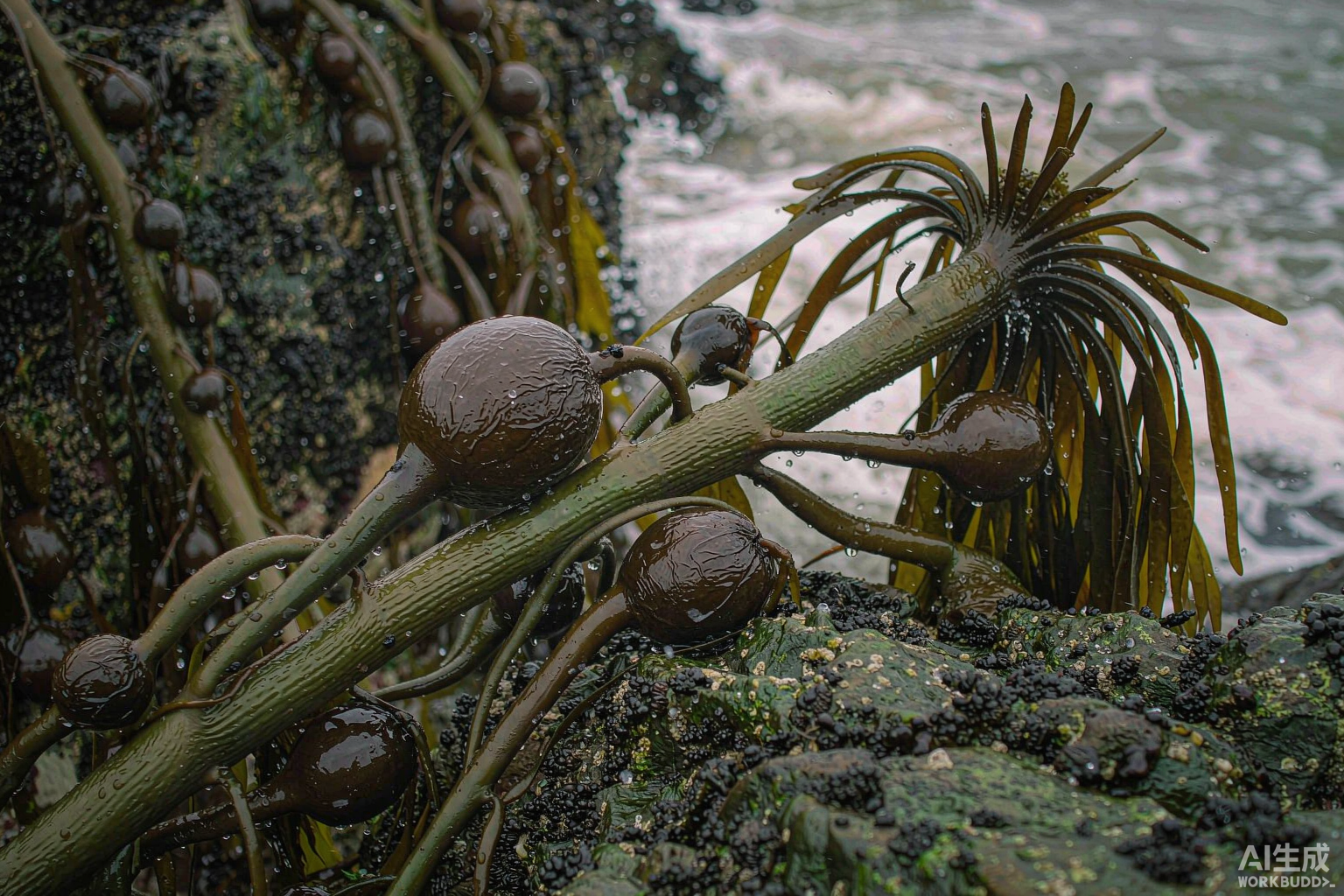
Amid the global trend of pursuing “green, efficient, and sustainable” agriculture, natural marine algal resources have emerged as a “new blue ocean” in the agricultural input sector, thanks to their rich active components and eco-friendly properties. Among them, Ascophyllum nodosum – a large brown alga native to the intertidal zones of the North Atlantic (e.g., coastal regions of Canada, Ireland, and Norway) – stands out for its exceptional performance in soil improvement, crop stress resistance enhancement, quality improvement, and yield increase, owing to its abundant bioactive substances. As an enterprise specializing in the export of humic acid, amino acids, seaweed extracts (seaweed essence), and EDDHA-chelated trace elements, we leverage over a decade of experience in marine biological resource research and application, combined with authoritative literature, field trial data, and global customer feedback. This article provides a comprehensive analysis of this “marine agricultural treasure,” covering its characteristics, agricultural benefits, application protocols, and selection criteria, while addressing key questions encountered in practical use.
I. Understanding Ascophyllum nodosum: The “Brown Algae Gem” of the North Atlantic
Ascophyllum nodosum is a perennial large alga belonging to the Fucaceae family of the Phaeophyta division. Its unique growth environment – characterized by low temperatures, high salinity, and strong tides – has driven the evolution of robust stress resistance mechanisms and the accumulation of rich active substances, giving it core advantages over other seaweeds (e.g., kelp, Sargassum):
- Morphological and Growth Traits: Mature Ascophyllum nodosum can reach 1–3 meters in length, with thick, hollow stalks that adjust buoyancy with tidal fluctuations. Gas-filled bladders on its fronds enable efficient absorption of sunlight and nutrients. It has a long growth cycle (lifespan exceeding 10 years), high biomass production, and strong regenerative capacity, allowing sustainable harvesting without damaging marine ecosystems.
- Core Active Components: Laboratory tests (conducted in accordance with standards outlined in Development and Application of Marine Algal Resources) confirm that Ascophyllum nodosum contains a variety of crop-beneficial substances, including:
- Plant Growth Regulators: Cytokinins (e.g., zeatin, with a content of 5–15 μg/g dry weight) and auxin analogs (e.g., indole-3-acetic acid), which regulate crop growth and development;
- Seaweed Polysaccharides: Alginate (15%–25% content) and fucose (5%–10% content), which improve soil structure and enhance crop stress resistance;
- Trace Elements: Chelated forms of calcium, magnesium, potassium, zinc, and boron, ensuring easy absorption by crops;
- Vitamins and Amino Acids: B vitamins, vitamin C, and 18 free amino acids, which supplement crop nutrition and improve quality.
The International Seaweed Association (ISA) notes in its White Paper on Agricultural Applications of Seaweeds that Ascophyllum nodosum outperforms most terrestrial plant extracts in both the variety and content of active components. Notably, its cytokinin content is 2–3 times higher than that of other common seaweeds – a key reason for its remarkable effectiveness in agricultural applications.
II. Scientific Benefits of Ascophyllum nodosum in Agriculture: “Full-Cycle Empowerment” from Soil to Crops
In agriculture, Ascophyllum nodosum is primarily used in the form of Ascophyllum nodosum extracts (a key raw material for seaweed essence). Its benefits extend beyond simple “nutrient supplementation”; instead, it acts on both soil and crops through multiple pathways, achieving “soil improvement → stress resistance enhancement → quality improvement → yield increase” throughout the crop lifecycle. Multiple studies and field trials confirm its core benefits in four key areas:
1. Improving Soil Microecology: Building a “Fertile Soil Foundation”
Soil is the foundation of crop growth. Ascophyllum nodosum extracts enhance soil physical, chemical, and biological properties to create an optimal growth environment for crops:
- Optimizing Soil Structure: Alginate in Ascophyllum nodosum binds to soil particles, promoting the formation of soil aggregates. Field trials show that continuous application reduces soil bulk density by 10%–15%, increases porosity, and improves water retention, fertilizer retention, and aeration. In arid regions, soil moisture content can be increased by 8%–12%, effectively alleviating drought stress.
- Regulating Soil pH: Organic acids (e.g., alginic acid, fucuronic acid) neutralize soil alkalinity, lowering the pH of saline-alkaline soils from 8.5–9.0 to 7.5–8.0. They also chelate excess sodium ions in the soil, reducing root damage caused by salinity. Data from cotton test fields in Xinjiang shows that application of Ascophyllum nodosum extracts increases cotton emergence rates by 20%–25%.
- Activating Soil Microorganisms: Polysaccharides and amino acids in the extract serve as “nutrient sources” for beneficial soil microbes (e.g., Bacillus subtilis, actinomycetes), increasing their populations by 30%–50%. This enhances soil enzyme activity (urease and phosphatase activity by 25%–35%), accelerating the decomposition of soil organic matter and nutrient transformation while reducing chemical fertilizer residues.
2. Enhancing Crop Stress Resistance: Addressing “Adverse Environmental Challenges”
Ascophyllum nodosum extracts regulate crop physiological metabolism to enhance resistance to common agricultural stresses such as low temperatures, drought, and pests/diseases, minimizing losses:
- Cold Stress Resistance: Low temperatures inhibit crop photosynthesis and enzyme activity. Cytokinins in Ascophyllum nodosum promote chlorophyll synthesis (increasing chlorophyll content by 12%–18%) and induce the accumulation of “freeze-protective substances” (e.g., proline, soluble sugars), lowering the cell freezing point. In northern wheat trials, seed soaking with the extract before sowing reduced winter frost damage by 25%–30% and accelerated spring regrowth by 3–5 days.
- Drought Stress Resistance: Under drought conditions, alginate in the extract forms a “protective film” on crop leaves, reducing water evaporation (lowering transpiration rates by 15%–20%). It also promotes root growth (increasing root length by 20%–30% and root hair density by 40%–50%), enhancing water absorption capacity. In corn drought trials, foliar application reduced leaf wilting by 30%–40% and increased 1000-grain weight by 5%–8%.
- Disease and Pest Resistance: Fucose and alginate in Ascophyllum nodosum induce crops to produce “phytoalexins” (e.g., flavonoids, terpenoids), enhancing resistance to pathogens (reducing tomato gray mold incidence by 20%–25%). Natural compounds in the extract also disrupt pest feeding behavior, reducing populations of aphids and spider mites by 15%–20% and lowering pesticide usage.
3. Improving Crop Quality: Producing “High-Value Agricultural Products”
As consumer demand for high-quality agricultural products grows, Ascophyllum nodosum extracts optimize nutrient accumulation in crops to enhance taste, flavor, and nutritional value:
- Vegetable and Fruit Quality Enhancement: For vegetables like tomatoes and cucumbers, foliar application increases soluble solids (by 1.5–2 units) and vitamin C content (by 10%–15%), while reducing malformed fruit rates (from 15% to 5%–8%). For fruits like citrus and grapes, it promotes uniform coloring (increasing coloration rate by 25%–30%), enhances sweetness (by 0.8–1.2 Brix units), reduces acidity (by 0.2–0.3 units), and extends shelf life (by 5–7 days).
- Field Crop Quality Optimization: For wheat and rice, application increases grain protein content (by 1–1.5 percentage points) and starch content (by 2%–3%), while reducing chalkiness (by 5%–8%), meeting high-quality grain standards. For cotton, it increases fiber length (by 0.5–1 mm) and breaking strength (by 0.2–0.3 cN/tex), improving fiber grade by 1–2 levels.
4. Promoting Crop Growth: Achieving “Stable Yield and Income Increase”
While ensuring quality, Ascophyllum nodosum extracts regulate crop growth cycles and promote nutrient absorption to boost yields:
- Seedling Root and Vigor Enhancement: Seed soaking or root drenching with the extract during sowing or transplanting stimulates root meristem activity, increasing lateral root number and root hair density (tomato seedling root fresh weight increases by 40%–50%) and shortening seedling establishment time (from 7–10 days to 3–5 days), laying a solid foundation for subsequent growth.
- Flowering and Fruit Set Promotion: Foliar application during the flowering period promotes pollen tube elongation via auxin analogs, increasing pollination success (fruit set rate by 10%–15%) and reducing flower/fruit drop (by 20%–25%). In apple orchard trials, application increased fruit number per tree by 15%–20% and individual fruit weight by 8%–10%.
- Significant Yield Increases: Comprehensive global field trial data shows that application of Ascophyllum nodosum extracts increases yields by: 8%–12% for field crops (wheat, rice), 12%–18% for vegetables (tomatoes, cucumbers), 15%–20% for fruits (citrus, grapes), and 10%–15% for cash crops (cotton, tea). These yield gains are stable and minimally affected by regional or climatic differences.
III. Agricultural Application Protocols for Ascophyllum nodosum Extracts: “Precision Adaptation” to Crops and Scenarios
Ascophyllum nodosum extracts (seaweed essence) offer flexible application methods – including foliar spraying, fertigation, seed soaking, and root drenching – making them suitable for different crops, growth stages, and planting scenarios. Based on our experience serving customers in over 20 countries worldwide, the following are targeted application protocols:
1. Field Crops (Wheat, Rice, Corn)
- Wheat:
- Seed Soaking: Soak seeds in a 500x diluted extract solution for 12 hours before sowing to improve germination (germination rate increases by 10%–15%);
- Regreening Stage: Foliar spray with an 800x solution to promote tillering (effective tiller number increases by 8%–10%);
- Flowering Stage: Foliar spray with a 600x solution to improve seed set (seed set rate increases by 5%–8%) and reduce empty grains.
- Rice:
- Pre-Transplanting: Spray seedlings with a 500x solution to enhance stress resistance (shortening seedling establishment time by 2–3 days);
- Tillering and Grain Filling Stages: Apply 300–500 ml of undiluted extract per mu via fertigation (twice, once at each stage) to promote grain plumpness (1000-grain weight increases by 2–3 g).
- Corn:
- Seedling Stage: Drench roots with a 500x solution to strengthen roots and seedlings (root length increases by 20%–30%);
- Tasseling Stage: Foliar spray with a 600x solution to promote tassel development and pollination (reducing barren ear tips by 10%–15%).
2. Cash Crops (Vegetables, Fruits, Cotton)
- Tomatoes:
- Seedling Stage: Apply a 500x solution via fertigation to cultivate robust seedlings;
- Flowering to Fruit Expansion Stages: Foliar spray with a 600x solution every 10 days to promote fruit set (fruit set rate increases by 12%–15%) and enhance fruit firmness.
- Citrus:
- Spring Shoot Stage: Apply 500 ml of undiluted extract per mu via fertigation (500x dilution) to promote spring shoot growth;
- Fruit Expansion Stage: Foliar spray with a 600x solution to reduce fruit splitting (splitting rate decreases by 20%–25%);
- Coloring Stage: Foliar spray with a 700x solution to promote uniform coloring (color uniformity increases by 30%–40%).
- Cotton:
- Pre-Sowing: Soak seeds in a 500x solution for 8 hours to improve emergence;
- Bud to Boll Stages: Foliar spray with a 600x solution every 15 days to promote boll formation (2–3 more bolls per plant) and enhance fiber quality.
3. Special Scenarios (Saline-Alkaline Soils, Continuous Cropping Obstacles, Organic Farming)
- Saline-Alkaline Soil Cultivation:
- Basal Application: Mix 500–800 ml of undiluted extract per mu with base fertilizer (combined with humic acid) to reduce soil salinity (soil electrical conductivity decreases by 15%–20%);
- Growing Season: Foliar spray with a 600x solution every 20 days to alleviate salt stress (crop leaf yellowing rate decreases by 25%–30%).
- Continuous Cropping Obstacle Fields:
- Pre-Transplanting: Apply 800 ml of undiluted extract per mu via fertigation (500x dilution) – combined with microbial inoculants – to improve soil microecology (soil-borne disease incidence decreases by 20%–25%);
- Growing Season: Apply via fertigation once a month to reduce growth inhibition from continuous cropping (plant height increases by 10%–15%).
- Organic Farming:
- Ascophyllum nodosum extracts meet organic certification standards such as EU EC 889/2008 and US OMRI, making them suitable for full-cycle use in organic crop production;
- Partial Chemical Fertilizer Replacement: Foliar spraying or fertigation during the growing season reduces chemical fertilizer usage by 15%–20% while maintaining yield and quality, aligning with organic agriculture’s goal of “reducing chemicals, improving quality.”
IV. Selection and Use of Ascophyllum nodosum Extracts: Answers to Common Customer Questions
Through global customer communications, we have collected numerous questions about the selection and use of Ascophyllum nodosum extracts. Below are answers to 8 key questions, based on industry standards and practical experience:
Q1: How to Identify High-Quality Ascophyllum nodosum Extracts (Seaweed Essence) and Avoid “Shoddy Products”?
A: Use the “Three Checks and One Test” method:
- Check Raw Material Source: High-quality products must clearly state “raw material: North Atlantic Ascophyllum nodosum” (not “mixed seaweeds” or “unknown seaweeds”). North Atlantic Ascophyllum nodosum has far higher active component content than varieties from other regions.
- Check Core Indicators: Packaging must specify “alginate content” (≥15% for qualified products, ≥20% for premium products) and “cytokinin content” (≥5 μg/g). Avoid “three-no products” (no indicators, no origin, no certification).
- Check Production Process: Prioritize products made via “low-temperature enzymatic hydrolysis” (≤60°C), which preserves active components (e.g., cytokinins, polysaccharides). Avoid “high-temperature alkaline hydrolysis,” which destroys active substances and may produce harmful byproducts.
- Test Product Properties: High-quality undiluted extracts are dark brown liquids with a mild seaweed odor (no pungent smell). When diluted, the solution is uniform without stratification or precipitation.
Q2: Can Ascophyllum nodosum Extracts Be Mixed with Other Agricultural Inputs (Fertilizers, Pesticides, Humic Acid, EDDHA)?
A: Yes, and synergistic effects can be achieved – but note compatibility restrictions:
- Mixing with Chemical Fertilizers: Can be mixed with urea, potassium dihydrogen phosphate, etc., for foliar spraying or fertigation. This improves fertilizer absorption efficiency (N/P/K utilization increases by 20%–25%) and reduces fertilizer runoff.
- Mixing with Pesticides: Compatible with most insecticides and fungicides (except alkaline pesticides like Bordeaux mixture). It enhances pesticide adhesion (leaf adhesion rate increases by 30%–40%), improves efficacy, and reduces pesticide phytotoxicity.
- Mixing with Humic Acid/EDDHA:
- Ascophyllum nodosum extract + humic acid: Enhances soil improvement effects;
- Ascophyllum nodosum extract + EDDHA-chelated trace elements: Promotes trace element absorption (Fe/Zn absorption increases by 30%–50%), especially effective for correcting crop nutrient deficiencies.
Q3: Is “More Better” When Using Ascophyllum nodosum Extracts? What Problems Arise from Overuse?
A: No – overuse causes issues including:
- Cost Wastage: Ascophyllum nodosum extracts are more expensive than conventional chemical fertilizers. Excessive use increases costs, and beyond a certain dosage, yield gains plateau (due to “marginal effects”).
- Crop Lodging Risk: Overuse during the seedling stage may cause excessive vegetative growth, resulting in thin stems and reduced lodging resistance.
- Leaf Burn: Foliar spraying at concentrations higher than 300x may cause leaf dehydration and burning (manifested as spots or wilting).
Recommendation: Strictly follow recommended dosages – typically 600–800x dilution for foliar spraying, and 300–800 ml of undiluted extract per mu for fertigation. Adjust based on crop variety and growth stage.
Q4: Do Application Methods for Ascophyllum nodosum Extracts Need Adjustment Under Different Climatic Conditions (High Temperature, Low Temperature, Heavy Rain)?
A: Yes – flexible adjustments ensure effectiveness:
- High-Temperature Seasons (≥30°C): Conduct foliar spraying before 9 AM or after 5 PM to avoid midday heat (prevents rapid evaporation and leaf burn). Slightly increase dilution (e.g., from 600x to 800x).
- Low-Temperature Seasons (≤15°C): Prioritize fertigation or root drenching (foliar absorption is inefficient at low temperatures). Dilute with warm water (20–25°C) to promote absorption.
- Rainy Seasons: If rain falls within 6 hours of foliar spraying, re-spray at half the original dosage. For fertigation, increase dosage by 20%–30% to offset nutrient loss from rainfall.
Q5: What Is the Difference Between Ascophyllum nodosum Extracts and Other Seaweed Extracts (e.g., Sargassum, Kelp Extracts)? How to Choose?
A: Core differences lie in active component content and efficacy:
| Comparison Dimension | Ascophyllum nodosum Extracts | Sargassum/Kelp Extracts |
| Cytokinin Content | High (5–15 μg/g dry weight) | Low (1–3 μg/g dry weight) |
| Alginate Content | 15%–25% | 8%–15% |
| Core Efficacy | Strong stress resistance; effective for flowering/fruiting | Mainly nutrient supplementation; weak stress resistance |
| Suitable Scenarios | Adverse environments (low temp, drought, salinity); flowering/fruiting stages | Routine nutrient supplementation; seedling growth |
- Choose Ascophyllum nodosum extracts if: Your region faces environmental stresses (e.g., low temperatures in northern areas, saline soils in western regions), or you need to improve fruit set rates and quality.
- Choose other seaweed extracts if: You only require routine nutrient supplementation (lower cost option).
Q6: What Precautions Apply to Using Ascophyllum nodosum Extracts in Organic Farming?
A: Ensure product compliance and proper usage:
- Select Certified Products: Choose extracts certified by EU EC, US OMRI, or China GB/T 19630. Packaging must display certification numbers (verifiable via official channels).
- Control Dosage: In organic farming, use no more than 2 L of undiluted extract per mu annually (avoids soil nutrient imbalance).
- Maintain Records: Document application details (time, dosage, crop growth stage) for organic certification audits.
Q7: How to Apply Ascophyllum nodosum Extracts in Hydroponics/Aeroponics? What Results Can Be Expected?
A: Application is highly effective in soilless cultivation:
- Hydroponics: Add a 500–800x diluted extract to the nutrient solution, replacing it every 15 days. This promotes root growth (tomato hydroponic root fresh weight increases by 30%–40%) and reduces root diseases.
- Substrate Cultivation: Mix a 500x diluted extract (1 L of undiluted extract per m³ substrate) into the substrate during transplanting. Conduct foliar spraying with a 600x solution every 20 days during the growing season to enhance stress resistance (e.g., reducing leaf wilting by 25%–30% under high temperatures) and improve quality.
Q8: What Is the Shelf Life and Storage Requirements for Ascophyllum nodosum Extracts?
A: Unopened products typically have a 2-year shelf life (under proper storage):
- Avoid Light and High Temperatures: Store in a cool, dry place (5–25°C), away from direct sunlight and heat (high temperatures degrade active components).
- Seal Tightly: Ensure unopened packaging is intact. After opening, tighten caps promptly to prevent evaporation and microbial contamination.
- Anti-Freezing Measures: Protect from freezing in cold regions. If frozen, thaw completely, stir thoroughly, and check for odor/stratification – the product remains usable if no issues are found (efficacy is unaffected).
V. Advantages of Our Ascophyllum nodosum Extract Products: Why Partner With Us?
As a specialized agricultural input exporter, our Ascophyllum nodosum extract products have gained global customer trust through three core advantages:
1. Raw Material and Process Advantages: Quality From the Source
- Premium Raw Materials: Sourced from wild Ascophyllum nodosum in the North Atlantic (Norwegian waters), certified for sustainable harvesting and high active component content (alginate ≥22%, cytokinins ≥8 μg/g).
- Advanced Technology: Utilizes “low-temperature enzymatic hydrolysis + membrane separation purification” (全程 temperature ≤55°C), maximizing retention of active substances. Products are highly pure (no sediment or heavy metals; Pb ≤0.5 mg/kg, Cd ≤0.1 mg/kg).
2. Full-Series Synergy: “One-Stop Solutions”
We customize solutions by combining Ascophyllum nodosum extracts with our humic acid, amino acid, and EDDHA-chelated trace element products, tailored to customer crops and scenarios:
- Saline-Alkaline Soil Cultivation: Ascophyllum nodosum extract + humic acid + EDDHA-chelated iron (soil improvement + nutrient deficiency correction);
- Organic Fruit/Vegetable Farming: Ascophyllum nodosum extract + amino acids (quality enhancement + stress resistance);
- Field Crop Yield Enhancement: Ascophyllum nodosum extract + EDDHA-chelated zinc (growth promotion + zinc deficiency prevention).
3. Global Compliance and Technical Support: “Export With Confidence, Use With Ease”
- Compliance Certifications: Products hold global organic certifications (EU EC, US OMRI, Japan JAS) and can be exported to over 100 countries/regions, eliminating compliance risks.
- Technical Services: Our team of 10 professional agronomists provides field trial guidance, dosage customization, and problem diagnosis, with 24-hour response times to ensure optimal product performance.
VI. Conclusion: Empowering Green Agricultural Futures With Marine Power
As a natural marine resource, Ascophyllum nodosum not only provides an efficient solution for crop growth but also aligns with the global agricultural trend of “reducing fertilizers/pesticides, improving quality.” As an agricultural input exporter, we remain committed to “science, compliance, and efficiency,” delivering high-quality Ascophyllum nodosum extracts and supporting products to global customers, helping farmers achieve “increased yields, higher incomes, and eco-friendly cultivation.”
If you require application protocols, target market compliance guidance, or sample testing for Ascophyllum nodosum extracts, please contact our team. We look forward to partnering with you to drive global green agricultural development through the power of marine biological resources!
Interested in JINGFENG’s seaweed extract products? Explore our full range of high-quality biostimulants and organic fertilizers.
Leave a Comment
Your email address will not be published. Required fields are marked *