





Disclaimer: This article is for general informational purposes only and reflects traditional use and user-reported experiences. JINGFENG’s humic and fulvic acid products are dietary supplements and are not intended to diagnose, treat, cure, or prevent any disease. Individual results may vary. Consult a qualified healthcare professional before use.
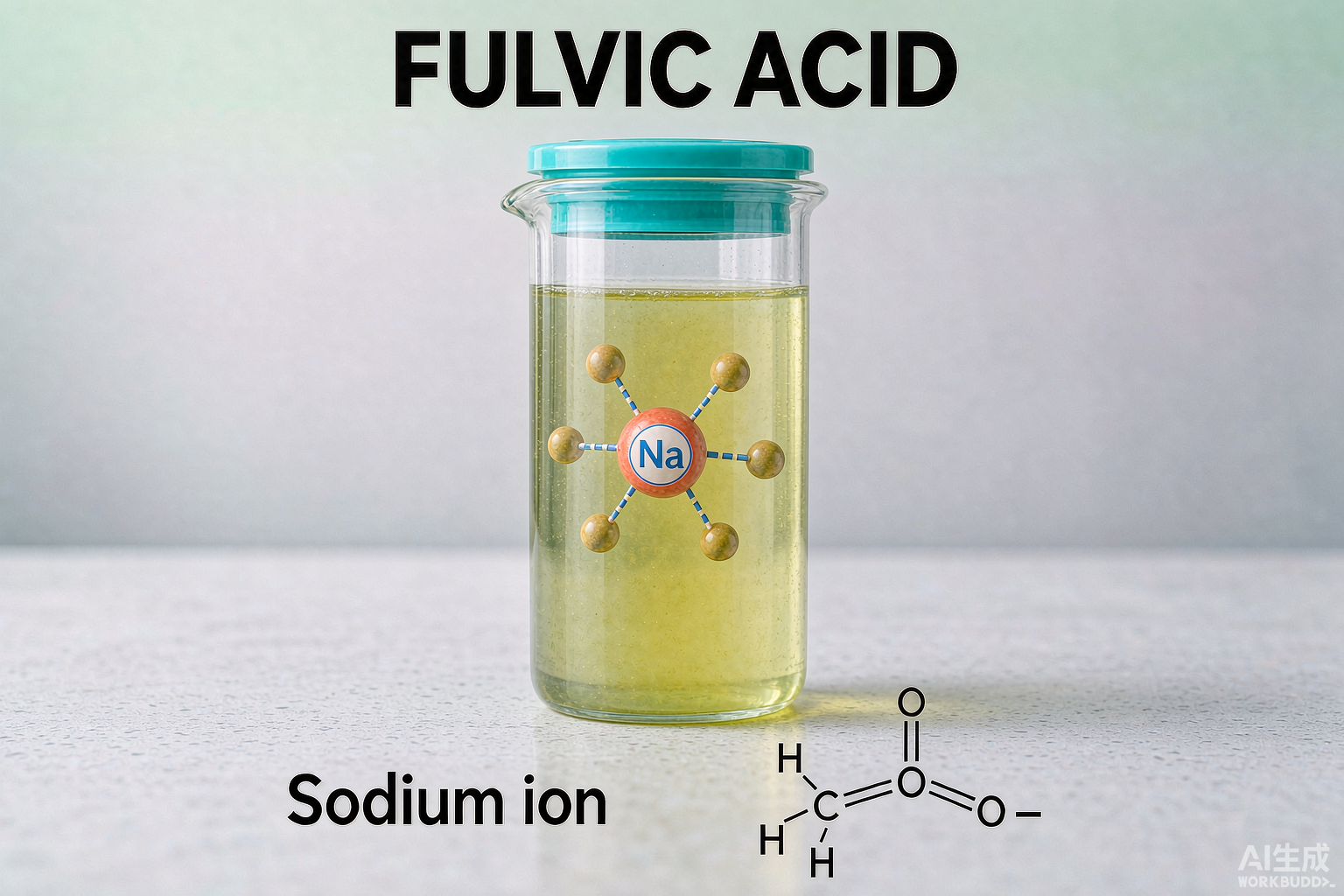
Fulvic acid, a natural organic substance with unique biological activities, has been widely applied in the medical field due to its anti-inflammatory, mucosal repair, and immunomodulatory effects. As a key quality indicator of Premium Fulvic Acid, sodium ion content significantly affects its pharmacological activity, safety profile, and formulation compatibility. The degree of influence varies with the sodium ion concentration and the specific dosage form of the product. This article elaborates on the multifaceted effects of sodium ion content on the properties of Premium Fulvic Acid, providing a theoretical basis for its rational development and clinical application.
1. Effects on Pharmacological Activity
The sodium ion content directly regulates the chemical form and solubility of fulvic acid, thereby affecting its pharmacological activity and bioavailability in the human body.
1.1 High Sodium Ion Content (e.g., 5%-12% in sodium fulvate)
When fulvic acid reacts with sodium hydroxide for neutralization, it forms sodium fulvate, a sodium salt of fulvic acid. The introduction of sodium ions significantly improves the water solubility of fulvic acid. This enhanced solubility makes it easier to prepare liquid dosage forms such as oral solutions and injections, facilitating rapid absorption by the human body. In clinical applications, sodium fulvate with high sodium content exhibits prominent anti-inflammatory and mucosal repair activities. It is commonly used in the supportive use of gastric ulcers, oral ulcers, and other mucosal lesions. The presence of sodium ions enhances the dispersibility of fulvic acid molecules in body fluids, promoting their binding efficiency with lesion sites and thereby improving therapeutic efficacy.
1.2 Low Sodium Ion Content (e.g., < 0.5% in free fulvic acid)
Free fulvic acid, obtained through desalination processes such as ion exchange, electrodialysis, or reverse osmosis, has an extremely low residual sodium ion content. Its molecular structure is closer to the natural state, which endows it with stronger antioxidant and immunomodulatory activities. This type of fulvic acid is particularly suitable for external preparations such as wound dressings and skin repair products. However, the low sodium content leads to poor water solubility. To address this issue, co-solvents or gel formulations are often required to avoid aggregation in water, which would otherwise reduce bioavailability.
2. Effects on Usage Safety
The safety of Premium Fulvic Acid is closely related to its sodium ion content, especially for special populations and parenteral administration routes. Controlling sodium ion levels within a reasonable range is crucial to avoiding adverse reactions.
2.1 Risks of High Sodium Content
For populations with sodium restriction needs, such as patients with hypertension, kidney disease, or heart failure, Premium Fulvic Acid with high sodium content (especially injections and oral preparations) may increase the body’s sodium load. This can lead to adverse reactions such as edema, increased blood pressure, and exacerbation of heart and kidney burdens. In addition, for injectable formulations, the sodium ion content must be precisely adjusted to match the osmolarity of human plasma (approximately 300 mOsm/L). Excessively high sodium ions can cause osmotic imbalance, resulting in hemolysis, venous irritation, and other serious safety issues.
2.2 Advantages of Low Sodium Content
Low-sodium or sodium-free Premium Fulvic Acid has higher safety and a wider applicable population. It is particularly suitable for special patients and long-term use scenarios. In external applications, low-sodium formulations are gentler and have better compatibility with the skin. They do not cause skin dryness or irritation due to sodium ion residue, making them more suitable for sensitive skin or wound repair.
3. Effects on Formulation Compatibility
Different medical dosage forms have specific requirements for the physical and chemical properties of fulvic acid, and sodium ion content plays a key role in determining whether fulvic acid can be successfully formulated into a stable and effective product.
3.1 Liquid Formulations (Injections, Oral Solutions)
Liquid formulations require a balance between sodium ion content, water solubility, and osmolarity. If the sodium ion content is too low, fulvic acid will have poor solubility and may precipitate, affecting the stability and efficacy of the formulation. If the content is too high, the osmolarity will exceed the safe range, posing potential risks. Therefore, the sodium ion content in liquid Premium Fulvic Acid is usually controlled between 0.1% and 0.5% to ensure both good solubility and osmotic compatibility.
3.2 Solid Formulations (Tablets, Capsules)
High-sodium fulvic acid (sodium fulvate) has better fluidity, which is beneficial for tablet compression and capsule filling during the production process. In contrast, low-sodium free fulvic acid has strong viscosity, requiring the addition of more disintegrants to ensure the appropriate disintegration rate of tablets. Insufficient disintegration may delay the release of active ingredients, affecting the onset of efficacy.
3.3 External Preparations (Gels, Dressings)
For external Premium Fulvic Acid preparations, excessive sodium ion content can lead to high osmolarity. When in contact with damaged skin, this may cause a stinging sensation, affecting patient compliance. Low-sodium formulations have lower osmolarity, which is more compatible with the skin’s physiological environment. They are gentler and more suitable for application on sensitive skin or wounds, promoting the support process.
4. Conclusion
Sodium ion content exerts a comprehensive and profound influence on the properties of Premium Fulvic Acid, covering pharmacological activity, usage safety, and formulation compatibility. High sodium content enhances water solubility and mucosal repair activity, making it suitable for liquid formulations for support mucosal lesions; low sodium content preserves strong antioxidant and immunomodulatory activities, which is ideal for external repair products and special populations with sodium restriction. Therefore, in the development and production of Premium Fulvic Acid, it is necessary to determine the appropriate sodium ion content based on the target dosage form and clinical application scenarios. Through process optimization and precise quality control, the performance of Premium Fulvic Acid can be maximized while ensuring clinical safety and efficacy. Future research should further explore the molecular mechanism of sodium ions regulating the biological activity of fulvic acid, providing more scientific basis for the refined preparation of Premium Fulvic Acid products.
Interested in JINGFENG’s humic and fulvic acid products? Explore our full range of high-quality biostimulants and organic fertilizers.




Leave a Comment
Your email address will not be published. Required fields are marked *