





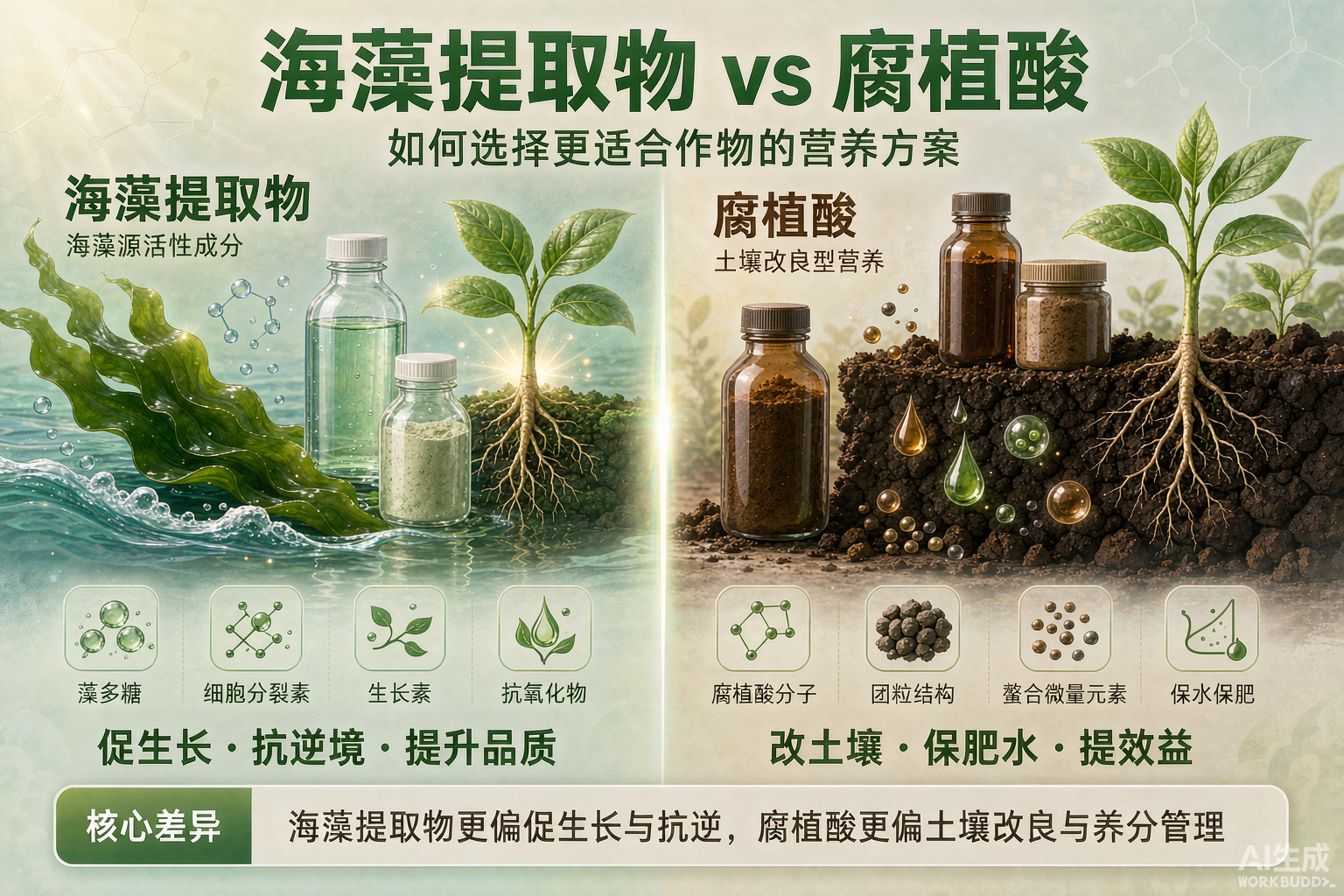
In the wave of green agricultural development, seaweed extract and humic acid have become popular new agricultural inputs among farmers due to their natural, eco-friendly properties and ability to improve crop quality and yield. However, these two substances differ significantly in their sources and compositions, and their application scenarios also have distinct focuses. This article will analyze the core differences and applicable scenarios of these two substances—from their chemical compositions to agricultural practices—to help farmers make scientific choices.
I. Composition Origin: Fundamental Differences Between “Ocean” and “Soil”
The core distinction between seaweed extract and humic acid stems from their completely different natural sources, which directly determine their chemical compositions and functional orientations.
1. Seaweed Extract: A “Treasury of Bioactive Substances” from the Ocean
Raw Material Source: Derived from large marine algae (e.g., brown algae, red algae, green algae) through processes like enzymatic hydrolysis, ultrasonic extraction, and low-temperature concentration, which preserve the natural bioactive substances in algae. Common raw materials include Ascophyllum nodosum, Macrocystis pyrifera, and Sargassum.
Core Components: Centered on “bioactive molecules” with complex and specific compositions:
Plant hormone analogs: Such as cytokinins (promote cell proliferation), gibberellins (stimulate stem elongation), and auxins (induce root development). These are naturally occurring and safer than chemically synthesized hormones.
Seaweed polysaccharides: Including alginate and fucoidan, which enhance crop stress resistance (drought, salt-alkali, and pest/disease resistance) and serve as “food” for beneficial soil microorganisms.
Trace elements: Naturally chelated potassium, calcium, magnesium, zinc, iodine, etc., with an absorption rate 2–3 times higher than that of ordinary chemical fertilizers and no risk of soil salinization.
Special bioactive substances: Such as betaines (regulate cell osmotic pressure), polyphenols (antioxidant and antibacterial), and carotenoids (improve crop quality).
2. Humic Acid: The “Core of Organic Matter” from Soil
Raw Material Source: A natural organic macromolecular compound formed by the long-term decomposition and transformation of animal and plant residues (e.g., peat, lignite, weathered coal, and decomposed straw) by microorganisms. It is the core component of soil organic matter.
Core Components: Based on “macromolecular organic carbon,” focusing on “soil improvement” and “nutrient activation”:
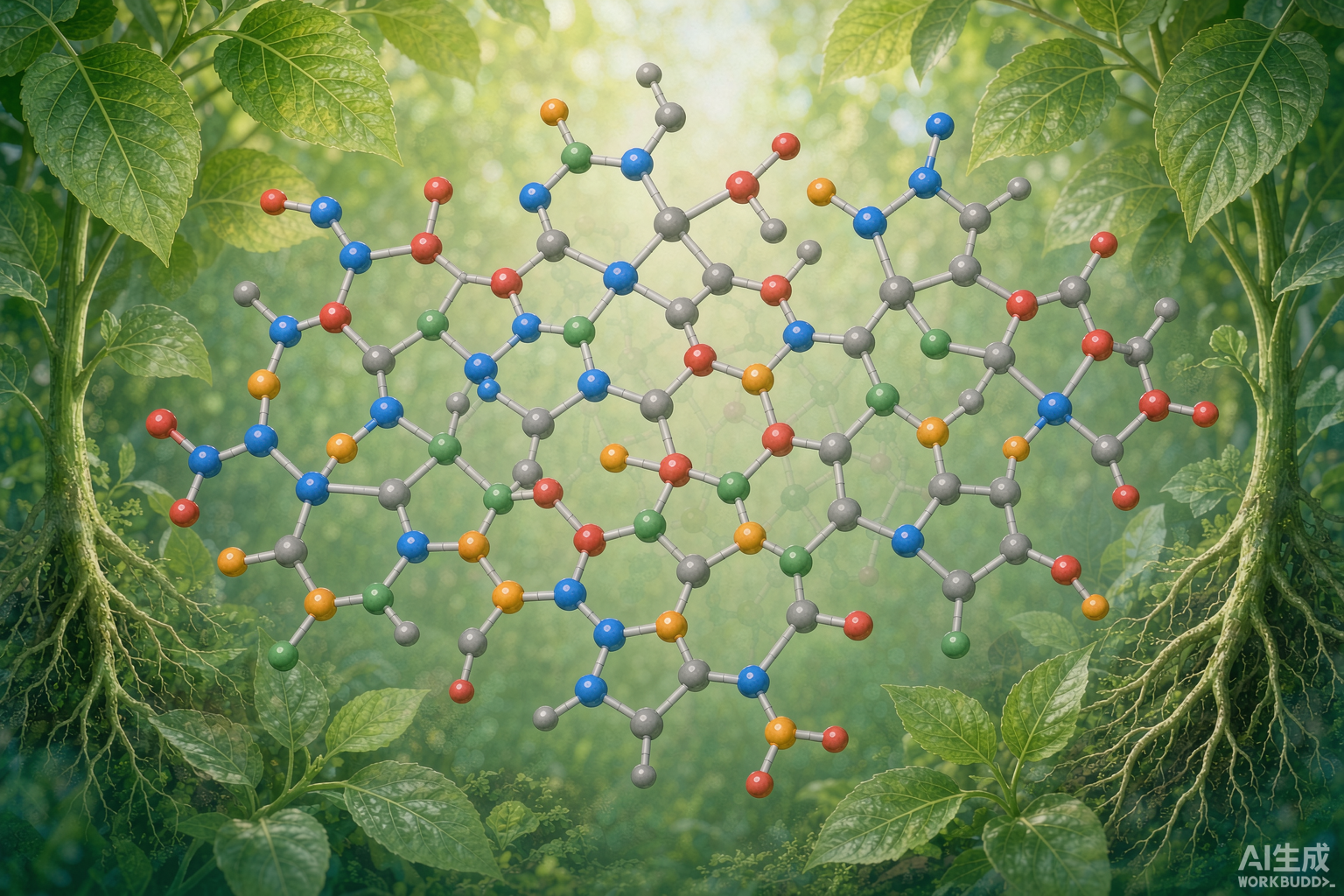
Main structure of humic acid: Composed of aromatic compounds and functional groups such as carboxyl (-COOH), hydroxyl (-OH), and quinone (-C=O), with strong adsorption and ion exchange capabilities.
Organic carbon pool: Contains 50%–70% carbon, which supplements soil organic carbon, improves soil aggregate structure, and alleviates soil compaction.
Nutrient activation factors: Carboxyl and hydroxyl groups can form chelates with nitrogen, phosphorus, potassium, and medium/trace elements (iron, manganese, copper, zinc) in soil, reducing nutrient loss and improving crop absorption rates (e.g., converting ineffective phosphorus in soil to available phosphorus).
Microbial carrier: Its loose molecular structure provides a habitat for beneficial soil microorganisms (e.g., nitrogen-fixing bacteria and phosphorus-solubilizing bacteria), promoting microbial reproduction.
II. Agricultural Application Comparison: Functional Differences Between “Growth Promotion” and “Soil Improvement”
Although both substances can increase crop yield and quality, their application scenarios and core advantages differ significantly. Farmers should choose flexibly based on soil conditions, crop growth stages, and planting goals.
- Core Functions: “Direct Growth Promotion” vs. “Fundamental Soil Improvement”
| Functional Dimension | Seaweed Extract | Humic Acid |
| Core Functional Orientation | Acts directly on crops, focusing on “growth promotion, stress resistance, and quality improvement” | Improves soil first, then empowers crops, focusing on “soil nurturing, fertilizer retention, and nutrient activation” |
| Direct Impact on Crops | Rapidly promotes root development (especially at the seedling stage), enhances photosynthetic efficiency, and increases fruit sweetness and coloring | Indirectly improves crop growth (through soil improvement) and enhances crop resistance to premature senescence |
| Effect on Soil | Supplements a small amount of organic carbon and promotes microbial activity (auxiliary role) | Significantly improves soil structure and enhances water/fertilizer retention capacity (core role) |
| Suitable Soil Types | Applicable to all soil types, with more obvious advantages in soils with good basic conditions | Priority for problematic soils such as saline-alkali soils, compacted soils, and barren soils |
2. Application Scenarios: “Growth Stage Adaptation” vs. “Soil Problem Adaptation”
(1) Selection Based on Crop Growth Stages
Seaweed Extract: Focus on “Growth Promotion and Stress Resistance in Critical Stages”
Seedling stage (from sowing to post-transplantation): Dilute and apply via root irrigation or foliar spraying. The auxins and cytokinins it contains promote root germination and reduce seedling establishment time (e.g., for vegetable transplantation and fruit tree planting).
Flowering to fruit-setting stage: Foliar spraying. The cytokinins promote flower bud differentiation, increase fruit-setting rate, and reduce flower/fruit drop (e.g., for strawberries, tomatoes, and citrus during flowering).
Stress periods (after drought, low temperatures, or pest/disease infestations): Emergency spraying. Seaweed polysaccharides and betaines regulate crop cell osmotic pressure, enhance stress resistance, and help crops recover quickly (e.g., after summer droughts or winter cold waves).
Quality improvement stage (from fruit enlargement to ripening): Apply via spraying or fertigation to increase sugar accumulation and improve fruit coloring (e.g., for grapes, watermelons, and apples during color transition).
Humic Acid: Focus on “Whole-Cycle Soil Nurturing”
Base fertilizer stage (before sowing/planting): Mix with organic fertilizers and chemical fertilizers (e.g., humic acid granular fertilizer, potassium humate) to supplement soil organic carbon, improve soil structure, and lay a foundation for crop growth.
Topdressing stage (growth period): Apply humic acid liquid fertilizer via fertigation or drip irrigation to activate fixed nutrients (e.g., phosphorus, calcium) in soil, reduce chemical fertilizer usage (usually by 10%–20%), and avoid soil salinization.
Continuous cropping soil improvement: Long-term continuous cropping (e.g., greenhouse vegetables, orchards) easily causes soil compaction and nutrient imbalance. Applying humic acid 1–2 times a year can alleviate continuous cropping obstacles and restore soil vitality.
Saline-alkali soil remediation: The carboxyl and hydroxyl groups of humic acid can adsorb sodium ions in soil, reduce soil pH, and improve the permeability of saline-alkali soils (should be used with irrigation and drainage measures).
(2) Selection Based on Planting Goals
If the goal is “rapid seedling growth and stress resistance for yield protection” (e.g., vegetable seedling raising, short-term cash crop cultivation): Prioritize seaweed extract.
If the goal is “soil improvement and long-term fertility enhancement” (e.g., long-term cultivation in orchards, field crops, or remediation of problematic soils): Prioritize humic acid.
If both needs exist (e.g., new greenhouse construction, cultivation in barren soils): Use them in combination (e.g., apply humic acid as base fertilizer and spray seaweed extract at the seedling stage) to achieve the dual effects of “soil nurturing + growth promotion.”
III. Clarification of Common Misconceptions: Avoid “One-Size-Fits-All” Usage
Misconception 1: “Humic acid is organic fertilizer, and seaweed extract is just hormones”
Humic acid is the “core active component” of organic fertilizers, but it is not equivalent to ordinary organic fertilizers (ordinary organic fertilizers have low carbon content and slow decomposition, while humic acid is highly decomposed active organic matter). Seaweed extract contains natural hormone analogs, but it has low concentration and high safety, and also includes polysaccharides, trace elements, and other components—it is not a single “hormone.”
Misconception 2: “No need for humic acid in good soils, and only seaweed extract is needed for weak crops”
Even in soils with good basic conditions, long-term use of chemical fertilizers will lead to organic carbon loss. Regular supplementation of humic acid can maintain soil fertility. If crop weakness is caused by soil compaction or poor nutrient absorption (rather than simple growth issues), spraying seaweed extract alone will have limited effects—humic acid should first be used to improve soil, followed by seaweed extract to promote growth.
Misconception 3: “These two substances can be mixed arbitrarily”
They can be mixed under normal circumstances (e.g., humic acid liquid fertilizer + seaweed extract foliar fertilizer), but pH value must be noted: Humic acid is alkaline (pH 8–10), while seaweed extract is acidic (pH 5–7). Test the pH value before mixing to avoid neutralization that reduces effectiveness (small-dose pre-testing is recommended).
IV. Conclusion: Scientific Combination for 1+1>2 Effects
Seaweed extract is a “direct nutrient provider for crops,” good at rapidly regulating crop growth and enhancing stress resistance; humic acid is a “soil caretaker,” focusing on soil improvement and nutrient activation. In practical agricultural production, these two substances are not “either/or” options but “complementary partners”:
For new plots/problematic soils: First apply humic acid to improve soil, then spray seaweed extract 1–2 weeks later to promote seedling growth.
For regular plots: Add humic acid as base fertilizer (to nurture soil) and spray seaweed extract 2–3 times during critical growth stages (flowering, stress periods) to ensure yield and quality.
For protected agriculture (greenhouses): Use humic acid once and seaweed extract 2–3 times per crop cycle to maintain soil vitality while ensuring crop yield and quality.
Through the scientific combination of “soil nurturing + crop growth promotion,” sustainable agricultural development can be achieved—high yield while maintaining soil fertility.
Interested in JINGFENG’s our application guides products? Explore our full range of high-quality biostimulants and organic fertilizers.



Leave a Comment
Your email address will not be published. Required fields are marked *