





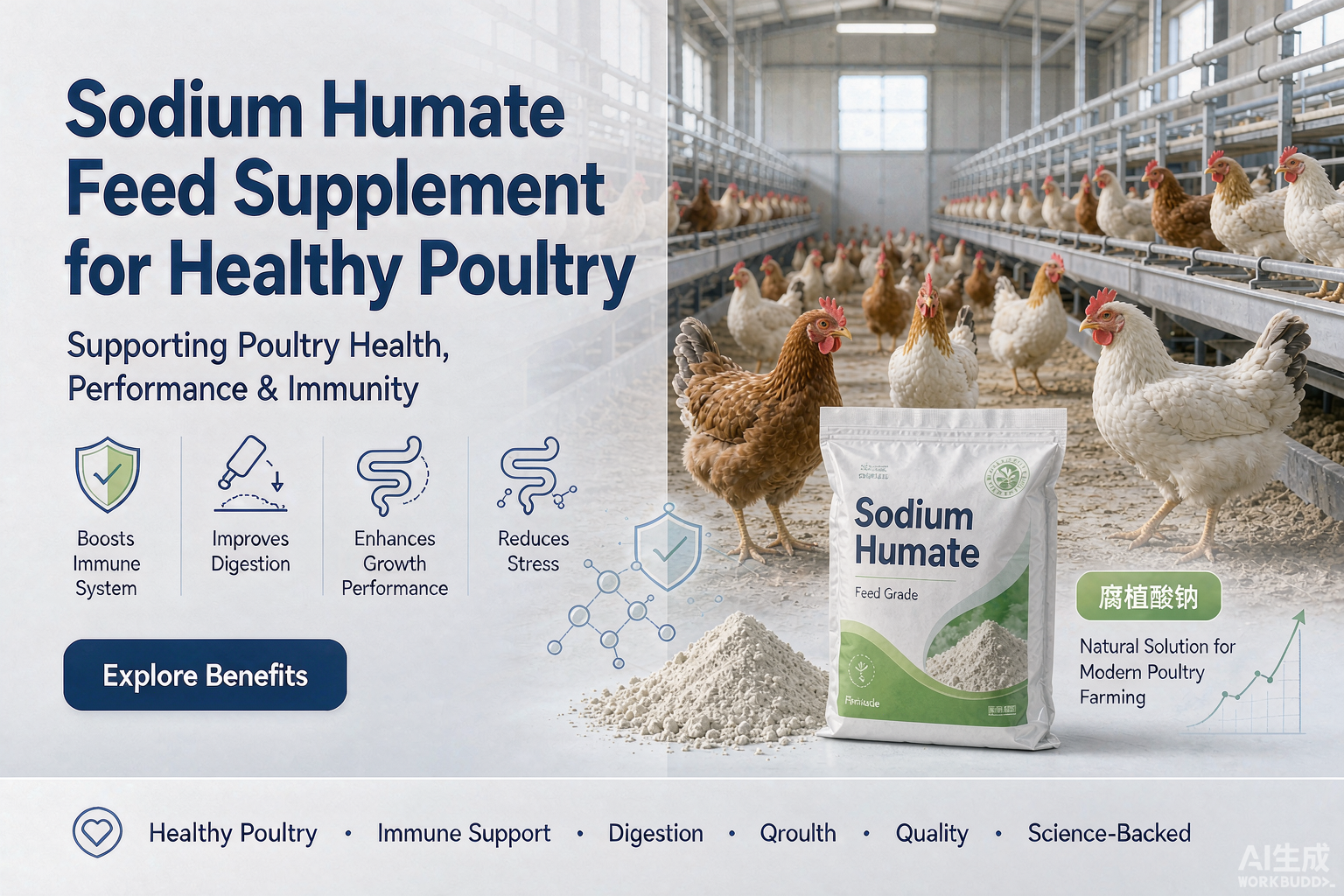
In today’s poultry farming industry, which is constantly pursuing green and efficient development, the search for natural and safe feed additives has become an industry consensus. Sodium humate, a sodium salt compound extracted from natural humic acid, has shown significant application value in poultry farming due to its unique physical and chemical properties and biological activity, becoming an important driver for the transformation and upgrading of farming models. This article will take you to deeply understand what sodium humate is and its core role in poultry farming.
I. Understanding Sodium Humate: A “Multifunctional Preparation” from Natural Sources
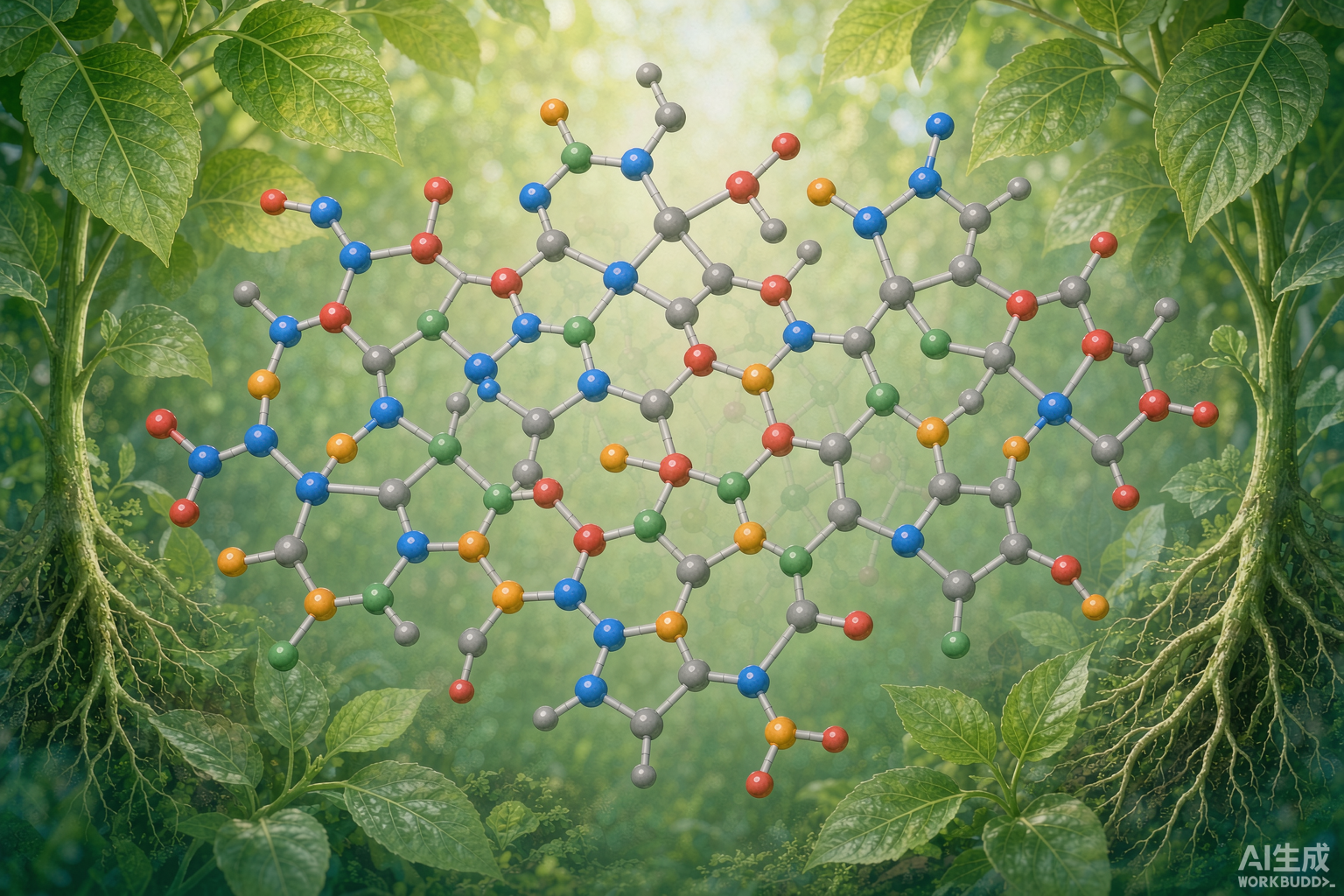
Sodium humate is a water-soluble compound formed by the combination of humic acid and sodium ions. Humic acid is widely present in natural mineral resources such as peat, lignite, and weathered coal, and is a natural organic substance formed by the long-term microbial decomposition and geological processes of animal and plant residues. This compound has a complex molecular structure, containing various active groups such as carboxyl, phenolic hydroxyl, and quinone groups, which also endow it with multiple functions such as adsorption, chelation, oxidation resistance, and regulation of microbial balance.
Different from chemically synthesized additives, sodium humate has the characteristics of being natural, non-toxic, and non-residual, meeting the core requirement of “safety and harmlessness” for green farming. This is also an important prerequisite for its wide application in poultry farming.
II. Core Roles of Sodium Humate in Poultry Farming
1. Regulating Intestinal Health and Enhancing Digestive Absorption Capacity
The intestine is an important organ for poultry to digest and absorb nutrients and resist pathogen invasion, and its health status directly affects farming efficiency. With its special molecular structure, sodium humate can form a protective film on the surface of poultry intestinal mucosa, reducing the adhesion and erosion of harmful bacteria (such as Escherichia coli and Salmonella) on the intestinal mucosa, and lowering the risk of intestinal inflammation.
At the same time, it can regulate the balance of microbial flora in the intestine, promote the proliferation of beneficial bacteria (such as lactic acid bacteria and bifidobacteria), and optimize the intestinal microecological environment. In addition, the active groups in sodium humate can also promote the secretion of poultry intestinal digestive enzymes (such as amylase and protease), improve the digestion and absorption rate of nutrients such as proteins and carbohydrates in feed, reduce the residue of undigested nutrients in feces, and reduce farming pollution.
2. Enhancing Immunity and Improving Stress Resistance
Immunity is the “first line of defense” for poultry to resist diseases, and sodium humate can enhance the immunity of poultry through multiple pathways. On the one hand, it can stimulate the development of poultry immune organs (such as the thymus and spleen), promote the proliferation and activity of immune cells (such as lymphocytes and macrophages), and enhance the body’s ability to recognize and eliminate pathogens; on the other hand, it can promote the synthesis of immunoglobulins, increase the antibody level in the blood, making poultry more resistant to pathogens such as viruses and bacteria.
In the process of poultry farming, stress factors such as group transfer, vaccination, high and low temperatures, and transportation can lead to decreased immunity and increased susceptibility to diseases. Sodium humate can alleviate the damage of stress responses to the poultry body, maintain the stability of physiological functions, and reduce the incidence of stress-related diseases.
3. Improving Production Performance and Enhancing Farming Benefits
Based on the improvement of intestinal health and immunity, sodium humate can significantly optimize the production performance of poultry. In broiler farming, adding an appropriate amount of sodium humate can increase the average daily gain of broilers, reduce the feed conversion ratio, shorten the farming cycle, and improve the survival rate of broilers; in layer farming, it can increase the egg production rate, extend the peak egg-laying period, improve eggshell quality (such as increasing eggshell thickness and reducing the broken egg rate), and enhance the commercial value of egg products.
In addition, sodium humate can also adsorb some harmful substances in feed (such as mycotoxins), reduce their harm to the poultry body, and further ensure the stability of production performance.
4. Reducing Farming Pollution and Supporting Green Farming
Currently, pollution from farming waste is an important challenge facing the industry. Sodium humate can improve the absorption rate of feed nutrients by poultry, reduce the emission of nutrients such as nitrogen and phosphorus in feces, and reduce the pollution of soil and water by feces; at the same time, it can regulate the intestinal flora, reduce the production of harmful gases (such as ammonia and hydrogen sulfide) in feces, improve the farming environment, reduce the incidence of respiratory diseases, and form a virtuous cycle of “healthy farming – environmental optimization”.
III. Precautions for the Application of Sodium Humate in Poultry Farming
Although sodium humate has significant advantages, the following points should be noted in the application process: first, control the addition dosage. Excessive addition may affect the appetite and digestion of poultry. Generally, it is recommended that the addition ratio in feed is 0.1%-0.5%, and the specific ratio should be adjusted according to the poultry breed, growth stage and farming environment; second, select high-quality products to ensure high purity, no impurities, and heavy metal content in line with national standards, avoiding the use of inferior products that may harm poultry health; third, use reasonable combinations. Sodium humate can synergize with other green additives such as probiotics and enzyme preparations to enhance the application effect, but it should be avoided to mix with strong acids and alkalis to prevent the destruction of its activity.
IV. Conclusion
As a natural, safe and multifunctional feed additive, sodium humate comprehensively supports the green and healthy farming of poultry by regulating intestinal health, enhancing immunity, improving production performance and reducing farming pollution, which is in line with the needs of the current industry’s sustainable development. With the continuous progress of farming technology and the in-depth research on natural additives, the application prospect of sodium humate in poultry farming will be broader. In the future, the rational development and utilization of natural resources such as sodium humate will become an important direction for promoting the high-quality development of the poultry farming industry.
Interested in JINGFENG’s our application guides products? Explore our full range of high-quality biostimulants and organic fertilizers.


Leave a Comment
Your email address will not be published. Required fields are marked *