






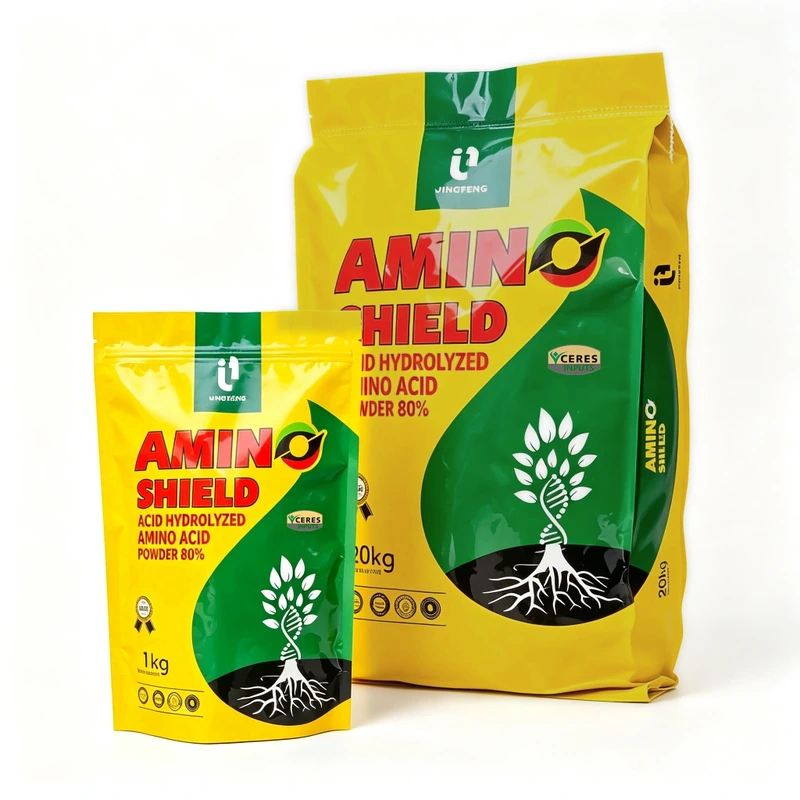
80% Hydrolyzed Amino Acid Powder
Selected for Liquid Blends — Holds Solubility in NPK and Trace-Element Tank Mixes
Every lot ships with a Certificate of Analysis stating tested total amino acids, free amino acids, total nitrogen and chloride.
Product Overview
Amino acids are the building blocks of proteins and, in free form, the most readily absorbed nitrogen source a plant or an animal can take up. JINGFENG’s amino acid range is produced from plant protein (soybean) or animal protein by acid or enzymatic hydrolysis, which breaks the protein chain down into free amino acids, short peptides and water-soluble nitrogen. The result is a 100% water-soluble input used as a foliar and fertigation biostimulant, a chelating agent for trace elements, and a feed-grade protein source.
80% Hydrolyzed Amino Acid Powder is the high-purity grade of our plant-source amino acid range. The protein is broken down by acid hydrolysis and then purified, which delivers a guaranteed ≥ 80% total amino acids with ≥ 75% in the free form — the fraction that plants and animals absorb directly, without a further breakdown step.
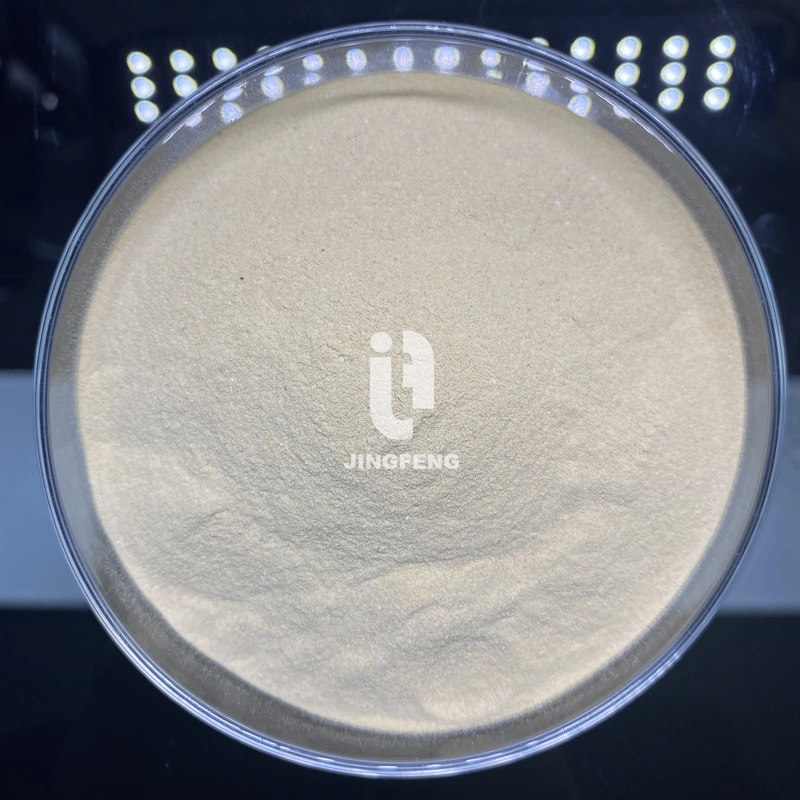
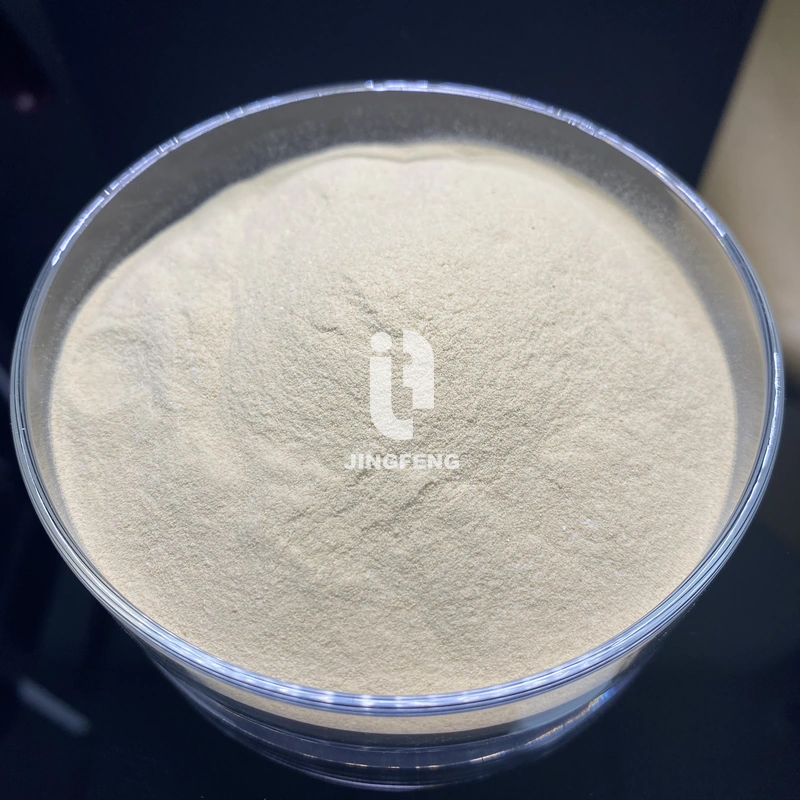
It is supplied as a fine, free-flowing powder that is 100% water soluble and carries a ≤ 3% chloride ceiling, so it is safe for chloride-sensitive crops and for feed rations where salt load matters. The same material is used as a foliar and fertigation biostimulant in agriculture and as a bioavailable protein source in animal feed.
Because the free amino acid share is high, the response is fast: the material is taken up through the leaf or the gut as single amino acid molecules rather than as protein that has to be digested first.
Key Benefits
≥ 80.0% total amino acids
A guaranteed floor of ≥ 80.0%, with ≥ 75.0% in the free form that plants and animals absorb directly.
Dissolves completely
100% water soluble with no residue, so it can go straight into the spray tank or through a drip line.
High free amino acid share
A large part of the load is in the free form, which plants and animals absorb without further breakdown.
Low chloride option
Low-chloride grades avoid salt burn on chloride-sensitive crops and keep the salt load down in feed rations.
Blend-friendly
A free-flowing powder that disperses evenly into NPK, organic fertilizer and feed premixes, even at low inclusion rates.
COA on every batch
Each lot ships with a Certificate of Analysis stating the tested total amino acids, free amino acids, total nitrogen, chloride and heavy metals against the stated Chinese industry standards.
Technical Specification
| Parameter | Specification | Test standard |
|---|---|---|
| Appearance | Light yellow-white powder | Visual inspection |
| Total amino acid | ≥ 80.0% | NY/T 1975-2010 |
| Free amino acid | ≥ 75.0% | NY/T 1975-2010 |
| Total nitrogen | ≥ 12.5% | NY/T 1977-2010 |
| Water solubility | 100% | NY/T 1973-2021 |
| Chloride (Cl⁻) | ≤ 3.00% | NY/T 1117-2006 |
| pH | 4.0 – 6.0 | NY/T 1973-2021 |
| Lead (Pb) | ≤ 50 ppm | NY/T 1978-2022 |
| Cadmium (Cd) | ≤ 10 ppm | NY/T 1978-2022 |
| Mercury (Hg) | ≤ 5 ppm | NY/T 1978-2022 |
| Arsenic (As) | ≤ 10 ppm | NY/T 1978-2022 |
| Chromium (Cr) | ≤ 50 ppm | NY/T 1978-2022 |
Specification values are guaranteed minimums on a dry basis, taken from the batch Certificate of Analysis and tested against the stated Chinese industry standards. Every shipment travels with its own COA stating the tested values.
Need the full Certificate of Analysis, MSDS, or TDS for your formulation or tender file?
Request COA / MSDS / TDSForm & Solubility
Form: fine, free-flowing powder with low dust, easy to weigh out by the bag and to blend into dry mixes.
In water: 100% water soluble. It wets out quickly and dissolves cleanly under light agitation, leaving no residue to block filters, spray nozzles or drip lines.
Handling: use standard dust protection when handling bulk. Reseal opened bags to keep moisture out.
Why a tank-mix grade. A water-soluble fertiliser formulation is a crowded solution: NPK salts, trace elements, and a pH that is often pushed upwards to keep everything in solution. Protein hydrolysates are sensitive to that environment — in a concentrated, high-pH NPK + trace-element system a standard hydrolysate can lose solubility and drop out. This grade is selected from production lots that hold their solubility better under exactly those conditions.
How to mix it. Dissolve the powder in water first, then bring in the NPK and trace-element fractions under agitation, and keep the tank moving. Run a 100 mL jar test before the first production batch — it is still the safe habit, even with the grade that was built for the job.
Typical amino acid composition — indicative analysis of the plant-source hydrolysate, shown for guidance and not a batch guarantee. The binding specification is the total and free amino acid guarantee in the table above; each batch carries its own COA.
How the amino acid grades compare
| Grade | Form | Total amino acid | Free amino acid | Total nitrogen | Best for |
|---|---|---|---|---|---|
| Salt-Free Amino Acid Liquid 30% | Liquid | ≥ 300 g/L | — | ≥ 7.0% | Chloride-sensitive crops; foliar and drip |
| 50% Hydrolyzed Amino Acid Powder | Powder | ≥ 45% | ≥ 40% | ≥ 15% | Cost-efficient foliar and fertigation programmes |
| 60% Hydrolyzed Amino Acid Powder | Powder | ≥ 60% | ≥ 55% | ≥ 12% | General-purpose foliar, drip and flushing |
| 80% Hydrolyzed Amino Acid Powder — Tank-Mix (this product) | Powder | ≥ 80.0% | ≥ 75.0% | ≥ 12.5% | Liquid NPK and trace-element compounding |
| 80% Amino Acid Powder — Standard | Powder | ≥ 80.0% | ≥ 75.0% | ≥ 12.5% | Feed premixes, dry blends, straight foliar and soil |
All grades are 100% water soluble and are hydrolysed from plant-source protein. Higher grades carry a larger free amino acid share, so less product is needed per hectare for the same response.
Applications & Dosage
For foliar and fertigation programmes in agriculture, and as a feed-grade amino acid source in poultry, swine, ruminant and aquaculture rations.
| Application | How to use | Rate |
|---|---|---|
| Foliar spray | Dilute with clean water and spray the leaf evenly, front and back, in the cool part of the day. | 1:2000 – 1:2500 |
| Drip / fertigation | Pre-dissolve and meter into the irrigation line or inject straight into the drip system. | 1:1500 – 1:2000 |
| Liquid NPK / trace-element compounding | Dissolve in water first, then add the NPK and trace-element fractions under agitation; keep the tank moving and jar-test before the first batch. | As formulated |
| Seed soaking | Soak seed in the diluted solution before sowing, then sow as normal. | 1:2000 – 1:3000 |
| Root drenching | Drench the root zone of seedlings and transplants to help establishment. | 1:1000 – 1:1500 |
| Animal feed | Blend into complete feed as a bioavailable protein and amino acid source. | 0.5 – 2% of feed |
Packaging & Storage
| Pack size | Description |
|---|---|
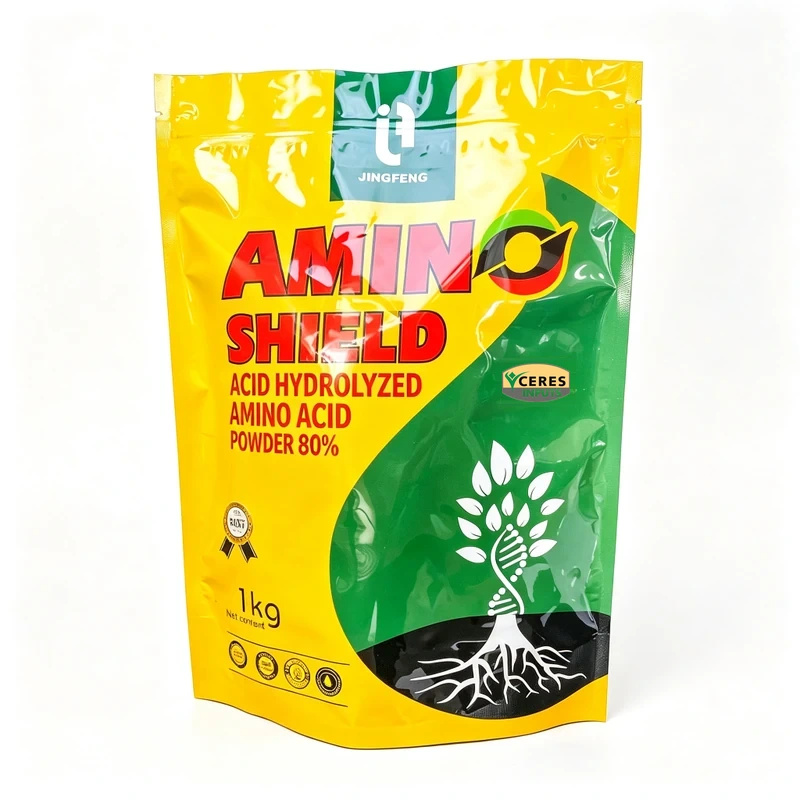
| 1 kg / 5 kg / 10 kg | Printed aluminium foil bag |
| 10 kg / 20 kg | Printed carton box |
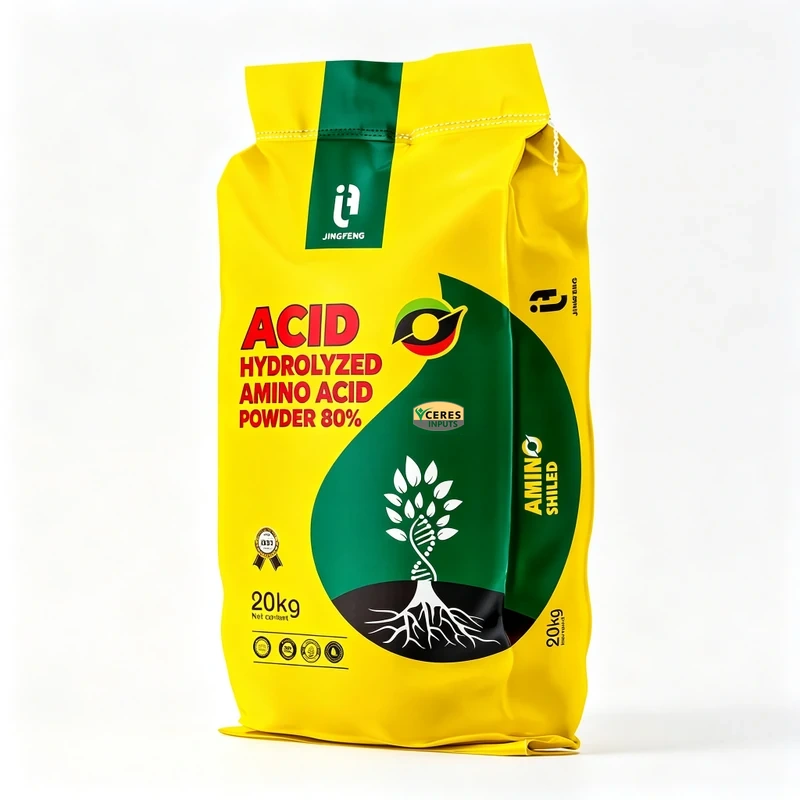
| 20 / 25 kg | Woven or paper bag with inner liner; colour-printed PP/PE bag with inner liner |
| 200 L drum / 1000 L IBC | For liquid grades; food-grade HDPE drum with tamper-evident closure |
| 1000 / 1100 kg | Jumbo bag with discharge spout |
Storage: Store in a cool, dry, well-ventilated place, away from direct sunlight and moisture. Stable for 24 months in the sealed original packaging; reseal opened bags. Liquid grades: store upright and frost-free.
Custom packaging, private-label printing and OEM specifications are available on request. Packaging photos are available in the product gallery.
Successful Cases
Greenhouse vegetable cooperative, Spain
Used as a foliar biostimulant on peppers; growers reported thicker fruit walls, more even colouring and less blossom-end rot.
Explore applications → Field referenceIntegrated crop and poultry farm, Brazil
The same batch went to soybean foliar sprays and to broiler feed; the farm reported better crop stress tolerance and improved weight gain.
Explore applications → Field referenceVegetable programme, Shandong
Pre-dissolved before metering into the line; flows through filters without blocking the drippers.
Explore applications →Full case studies with crop data are published in our application sectors.
Frequently Asked Questions
What is the difference between the tank-mix grade and the standard grade?
Both carry the same guaranteed analysis — ≥ 80% total amino acids, ≥ 75% free, ≥ 12.5% total nitrogen, ≤ 3.00% chloride and 100% water solubility — and both dissolve completely in plain water. The difference is how they behave once the tank is loaded. The tank-mix grade is selected from lots that hold their solubility in concentrated, high-pH NPK and trace-element formulations, so it is the one to specify for liquid compounding. For dry blending, feed premixes and straight foliar or soil programmes, our standard grade does the same job at a lower cost.
Can one product really be used for both feed and fertilizer?
Yes. Its purity, balanced amino acid spectrum, low chloride and heavy-metal control make it suitable for both. In feed it works as a bioavailable protein and amino acid source; in agriculture it supplies nitrogen and free amino acids as a biostimulant.
What is the difference between total and free amino acids?
Total amino acids include both the free molecules and the amino acids still bound in short peptides, measured after full hydrolysis. Free amino acids are the single, unbound molecules that a plant leaf or an animal gut can take up immediately. This grade guarantees ≥ 80% total and ≥ 75% free, so most of the load needs no further breakdown.
Is it plant source or animal source?
This grade is plant source, hydrolysed from soybean protein. We also produce animal-source grades; tell us which your market or certification body requires and we will quote the matching product.
How do I dilute it?
For foliar spraying dilute 1:2000 to 1:2500 with clean water; for drip or fertigation 1:1500 to 1:2000; for seed soaking 1:2000 to 1:3000; for root drenching 1:1000 to 1:1500. Always add the product to the water, not water to the product, and run a jar test before tank-mixing with agrochemicals.
What is the chloride content and why does it matter?
The guaranteed ceiling is ≤ 3.00%. A low chloride load avoids salt burn on chloride-sensitive crops such as strawberries and tobacco, and keeps the salt burden down in monogastric feed rations.
Is it suitable for organic farming?
Hydrolysed plant-source amino acids are widely accepted in organic production. Rules differ by market and certifier, so please check with your certification body and ask us for the input list and technical data sheet you need.
How is it packed and what is the minimum order?
Standard pack is a 20 kg or 25 kg bag with inner liner, with 1 kg and 10 kg options for sampling. MOQ one pallet; 7–15 days ex-works. Private-label printing and custom blends are available on request.
Need a quotation or a sample?
Tell us your application, target market and packaging — we will come back with specification, price and lead time.
Request a Quote
 8618920222224