






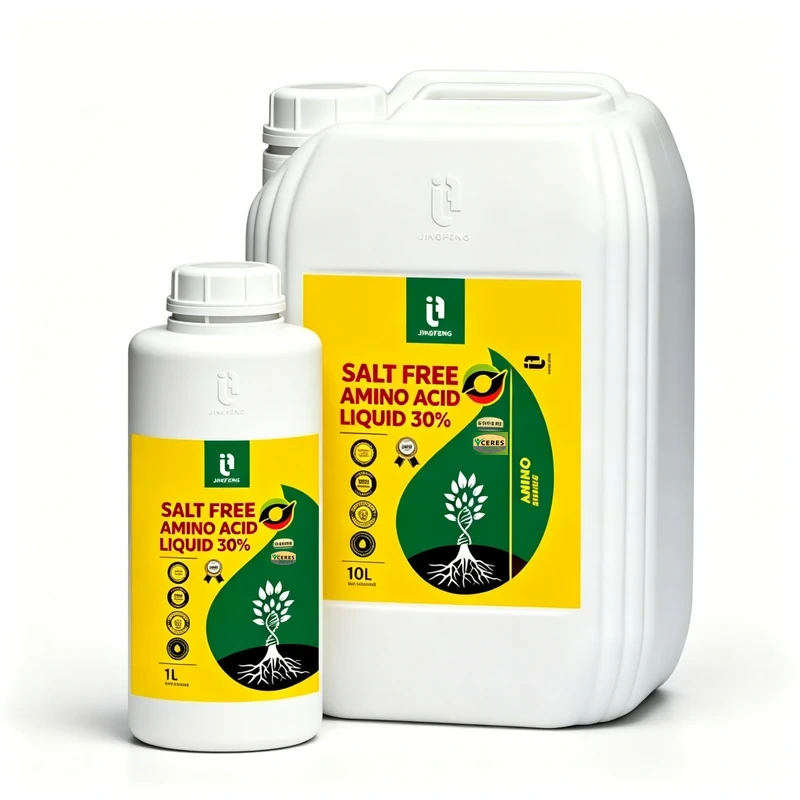
Salt-Free Amino Acid Liquid 30%
Built for Chloride-Sensitive Crops — ≥ 300 g/L Amino Acids at ≤ 1% Chloride
Every lot ships with a Certificate of Analysis stating tested total amino acids, free amino acids, total nitrogen and chloride.
Product Overview
Amino acids are the building blocks of proteins and, in free form, the most readily absorbed nitrogen source a plant or an animal can take up. JINGFENG’s amino acid range is produced from plant protein (soybean) or animal protein by acid or enzymatic hydrolysis, which breaks the protein chain down into free amino acids, short peptides and water-soluble nitrogen. The result is a 100% water-soluble input used as a foliar and fertigation biostimulant, a chelating agent for trace elements, and a feed-grade protein source.
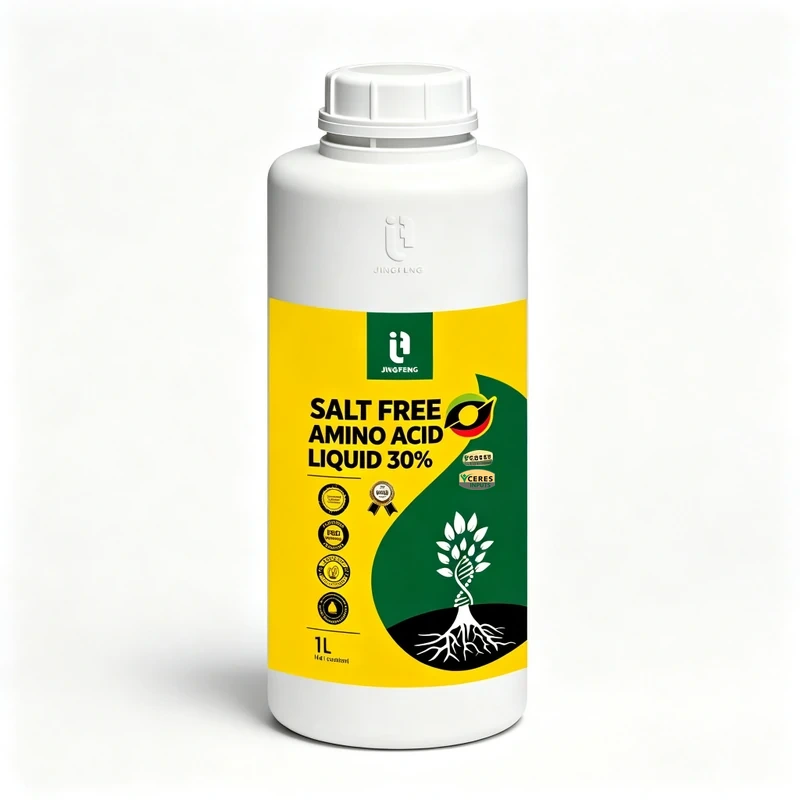
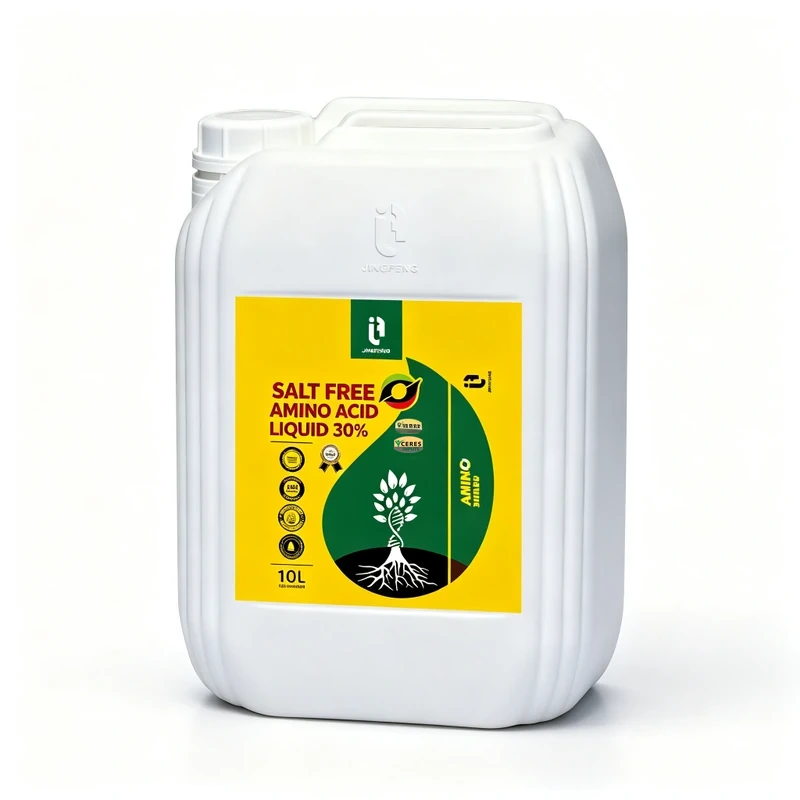
Salt-Free Amino Acid Liquid 30% is a plant-source hydrolysate that has been taken through an extra de-salting step. The guaranteed floor is ≥ 300 g/L total amino acids with ≥ 7% total nitrogen, while chloride is held to ≤ 1% — low enough that the product is classified as salt-free and can be used on chloride-sensitive crops without adding to the salt load in the root zone.
The hydrolysate carries the full spectrum of free amino acids in small, unbound molecules, so it is taken up through the leaf or the root directly instead of first being broken down in the soil. It works as a nutrient supply and as a natural biostimulant at the same time: root development, flower and fruit retention, and tolerance of cold, heat, drought and waterlogging.
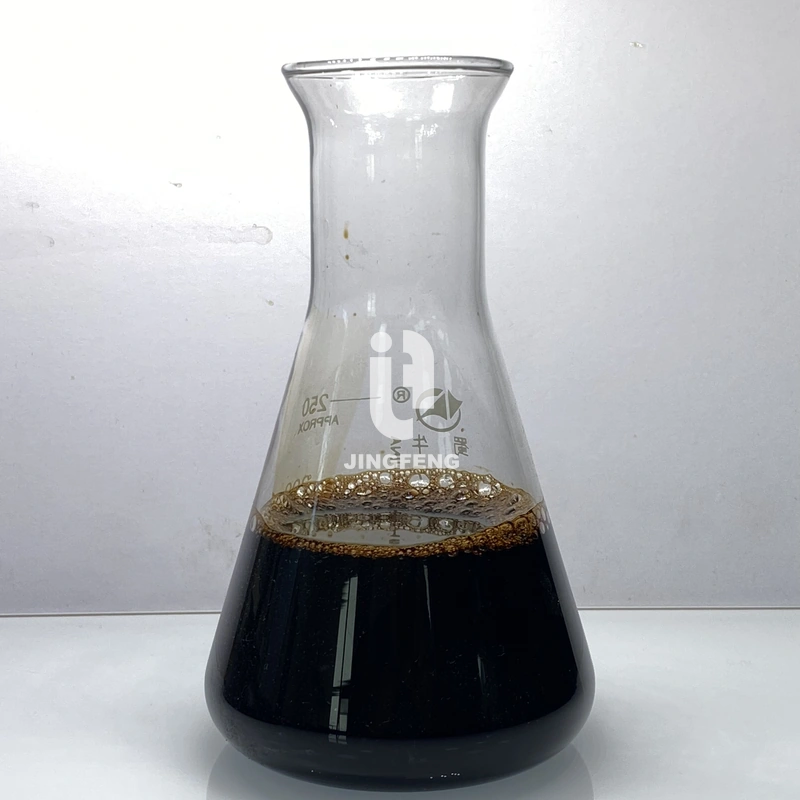
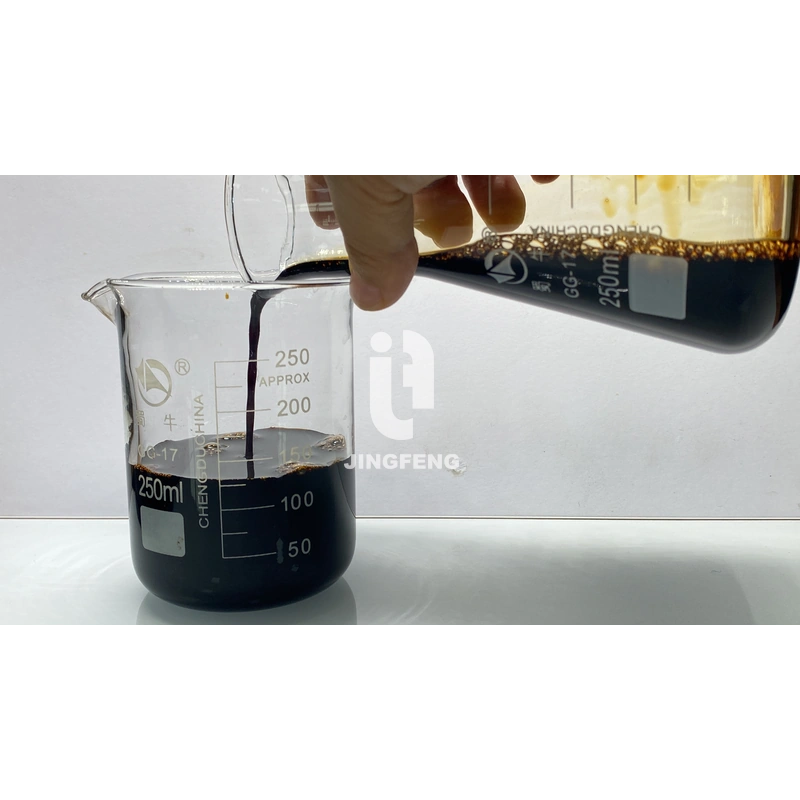
It is supplied as a dark brown liquid that mixes with water in any proportion, so there is no dissolving step before it goes into the spray tank or the fertigation line.
Key Benefits
≥ 300 g/L total amino acids
A guaranteed floor of ≥ 300 g/L carried in a ≤ 1% chloride liquid, so it feeds the crop without adding to the salt load in the root zone.
No dissolving step
Supplied ready to dilute, which saves a mixing stage in fertigation and spray programmes.
Metering accuracy
A uniform liquid is easy to dose precisely, batch after batch.
High load per litre
Concentrated grades carry a high amino acid load per litre, which keeps freight cost per unit of active down.
Mixes with most inputs
Compatible with common foliar fertilisers and, after a jar test, with many agrochemicals.
COA on every batch
Each lot ships with a Certificate of Analysis stating the tested total amino acids, total nitrogen, chloride, pH and density for that batch.
Technical Specification
| Parameter | Specification | Test standard |
|---|---|---|
| Appearance | Dark brown liquid | Visual inspection |
| Total amino acid | ≥ 300 g/L | NY/T 1975-2010 |
| Total nitrogen | ≥ 7.0% | NY/T 1977-2010 |
| Chloride (Cl⁻) | ≤ 1.0% | NY/T 1117-2006 |
| pH | 3.0 – 5.0 | NY/T 1973-2021 |
| Density | 1.15 g/cm³ | GB/T 20886.2-2021 |
Specification values are guaranteed minimums on a dry basis, taken from the batch Certificate of Analysis and tested against the stated Chinese industry standards. Every shipment travels with its own COA stating the tested values.
Need the full Certificate of Analysis, MSDS, or TDS for your formulation or tender file?
Request COA / MSDS / TDSForm & Solubility
Form: a concentrated liquid supplied in drums or IBCs, ready to dilute and meter without a dissolving step.
In water: miscible with water in any proportion, so it can be injected straight into a fertigation line or dosed into a spray tank.
Handling: store upright and frost-free. Rinse lines with clean water after use.
In water: miscible in any proportion, with no insoluble matter to settle out or block filters, spray nozzles or drippers. Shake gently before use so the drum is uniform from top to bottom.
Compatibility: it can be used on its own or compounded with macro-, secondary- and trace-element fertilisers. Do not mix with strongly alkaline products above pH 8 — run a 100 mL jar test on the diluted solution before the first full batch.
How the amino acid grades compare
| Grade | Form | Total amino acid | Free amino acid | Total nitrogen | Best for |
|---|---|---|---|---|---|
| Salt-Free Amino Acid Liquid 30% (this product) | Liquid | ≥ 300 g/L | — | ≥ 7.0% | Chloride-sensitive crops; foliar and drip |
| 50% Hydrolyzed Amino Acid Powder | Powder | ≥ 45% | ≥ 40% | ≥ 15% | Cost-efficient foliar and fertigation programmes |
| 60% Hydrolyzed Amino Acid Powder | Powder | ≥ 60% | ≥ 55% | ≥ 12% | General-purpose foliar, drip and flushing |
| 80% Hydrolyzed Amino Acid Powder — Tank-Mix | Powder | ≥ 80.0% | ≥ 75.0% | ≥ 12.5% | Liquid NPK and trace-element compounding |
| 80% Amino Acid Powder — Standard | Powder | ≥ 80.0% | ≥ 75.0% | ≥ 12.5% | Feed premixes, dry blends, straight foliar and soil |
All grades are 100% water soluble and are hydrolysed from plant-source protein. Higher grades carry a larger free amino acid share, so less product is needed per hectare for the same response.
Applications & Dosage
For chloride-sensitive and high-value crops — strawberries, tobacco, grapes, tomatoes, cucumbers, peppers, citrus, peaches, rice and wheat — from seedling emergence through to harvest.
| Application | How to use | Rate |
|---|---|---|
| Foliar spraying | Dilute and spray the leaf evenly, front and back, in the morning or the evening. Two to three applications per growth cycle. | 1:1000 – 1:1500 · 12–18 L/ha |
| Drip irrigation | Meter into the irrigation line during root development and rapid growth; repeat every 7–10 days. | 1:800 – 1:1200 · 20–25 L/ha |
| Compounding | Use on its own or compound with macro-, secondary- and trace-element fertilisers. Do not mix with strongly alkaline products above pH 8; jar-test first. | As formulated |
Packaging & Storage
| Pack size | Description |
|---|---|
| 1 kg / 5 kg / 10 kg | Printed aluminium foil bag |
| 10 kg / 20 kg | Printed carton box |
| 20 / 25 kg | Woven or paper bag with inner liner; colour-printed PP/PE bag with inner liner |
| 200 L drum / 1000 L IBC | For liquid grades; food-grade HDPE drum with tamper-evident closure |
| 1000 / 1100 kg | Jumbo bag with discharge spout |
Storage: Store in a cool, dry, well-ventilated place, away from direct sunlight and moisture. Stable for 24 months in the sealed original packaging; reseal opened bags. Liquid grades: store upright and frost-free.
Custom packaging, private-label printing and OEM specifications are available on request. Packaging photos are available in the product gallery.
Successful Cases
Strawberry greenhouse, Hebei
Four hectares carrying salt build-up from earlier fertiliser programmes: 16% leaf burn, 23% flower drop and 18 g average berry weight. Foliar at 1:1200 at bud break and flowering, plus one drip application at 1:1000 at young fruit stage. The grower reported leaf burn cleared, flower drop down to 4%, and berries at 22 g and 11.5 °Brix.
Explore applications → Field referenceTobacco field, Yunnan
Five hectares showing salt damage: pale leaf and nicotine at 1.7%, below premium grade. Drip at 1:900 at seedling and rapid growth, plus one foliar spray at 1:1500 at leaf expansion. The grower reported even dark green leaf, nicotine up to 2.2% for premium grading, and 17% more yield per hectare.
Explore applications →Full case studies with crop data are published in our application sectors.
Frequently Asked Questions
What does “salt-free” mean if the product still contains some chloride?
“Salt-free” describes the level, not an absolute zero. The guaranteed ceiling is ≤ 1% chloride, an order of magnitude below a conventional hydrochloric-acid hydrolysate. At that level the product does not add a meaningful salt load to the root zone, which is what matters on chloride-sensitive crops.
Which crops benefit most?
Strawberries, tobacco and grapes are the classic cases — they are where chloride damage shows up first, as leaf burn, flower drop or a quality downgrade. It is equally at home on tomatoes, cucumbers, peppers, citrus, peaches, rice and wheat, where the amino acid load supports even growth, flower and fruit retention and seedling vigour.
Can I tank-mix it with pesticides or other fertilisers?
Yes with most neutral and weakly acidic pesticides, and it can be compounded with macro-, secondary- and trace-element fertilisers. Avoid mixing with strongly alkaline material above pH 8, and run a 100 mL jar test on the diluted solution before the first full batch.
How do I dilute it?
Foliar spraying 1:1000 to 1:1500, at 12–18 L per hectare per application, sprayed in the morning or the evening, two to three applications per cycle. Drip irrigation 1:800 to 1:1200, at 20–25 L per hectare, repeated every 7–10 days. Do not spray above 30 °C, and reapply if rain falls within four hours.
Is it safe on young seedlings?
Yes. Use the weaker end of the foliar range, 1:1500, and test a small area first. The low-salt formula is mild enough for seedling stages without leaf scorch.
Why does the liquid darken in the drum?
That is natural oxidation of the amino acids. It does not reduce the nutrient content or the effectiveness. Shake gently before use to bring the liquid back to a uniform consistency.
Is it suitable for organic farming?
It is made from natural raw materials with no synthetic additives. Rules differ by market and certifier, so please check with your certification body and ask us for the input list and technical data sheet you need.
What is the shelf life and how should it be stored?
24 months from the production date in the sealed original packaging, stored between 5 °C and 35 °C, upright and frost-free, out of direct sunlight. Seal the container tightly after each use.
Do you offer samples, and what is the minimum order?
Yes — samples are available for testing with an application guide included. The bulk MOQ is 500 L, and there is a volume discount above 5000 L. Tell us your destination port and we will quote.
Need a quotation or a sample?
Tell us your application, target market and packaging — we will come back with specification, price and lead time.
Request a Quote
 8618920222224